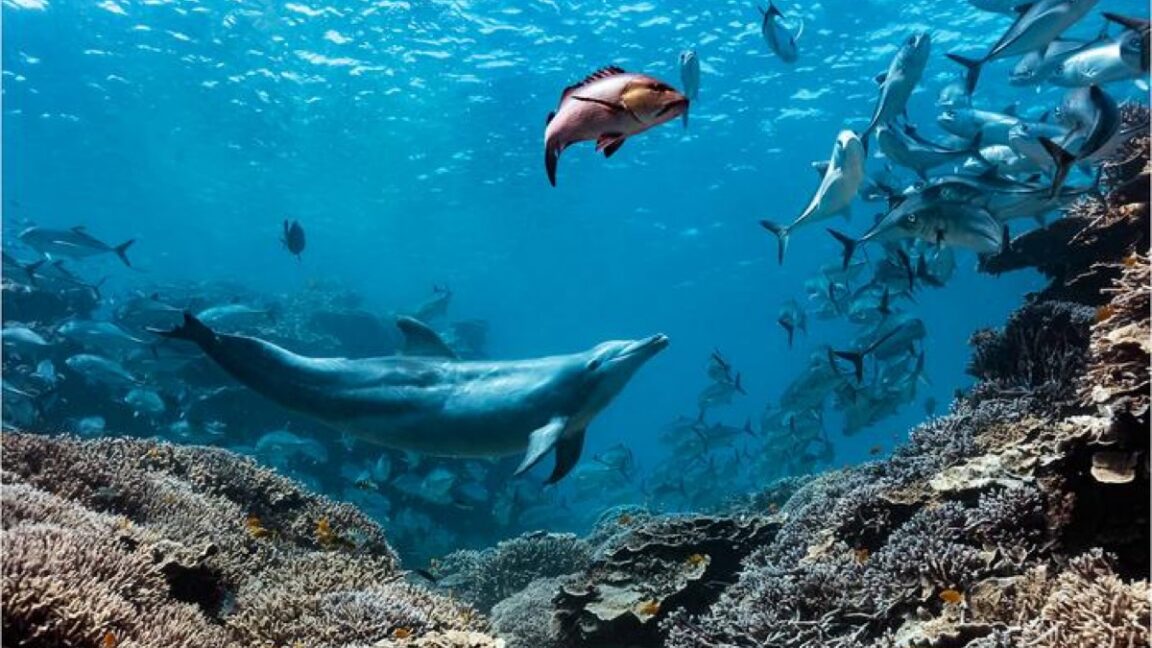
Staff at the Lady Elliott Island Eco Resort off the southern Great Barrier Reef in Australia are well acquainted with the shenanigans of a male bottlenose dolphin they’ve nicknamed Bubbles.
The dolphin’s behavior is the focus of a new paper published in the journal Ecology and Evolution.
Bees and wasps are common culprits, such as the cuckoo wasp, which lays its eggs in the nests of other wasp species.
Between June 2021 and October 2025, the authors collected 20 documented foraging sightings of Bubbles, 11 of which involved kleptoparasitic behavior.
Nor does Bubbles eat the actual fish.
5 sentences from our version of the report,
chosen to cover it. Nothing here is written; every line is in the article below.
How
Summarized version
This is also a small sample size and a limited dataset, so more evidence is needed, preferably from other dolphins in the region, before one could conclude such behavior is common among the species, or whether Bubbles is just special.
Headline check
The one thing this headline claims is in the report.
Figures, names and quoted words in the headline, looked for in the report itself — not in the summary above. One claim in this headline could be checked, so this is a narrow pass and not a thorough one. How this is checked
The article, shortened and in plain language
Staff at the Lady Elliott Island Eco Resort off the southern Great Barrier Reef in Australia are well acquainted with the shenanigans of a male bottlenose dolphin they’ve nicknamed Bubbles. Bubbles has been around since at least 2017 and regularly harasses local bigeye trevally, chasing a fish around and stressing it so much that the fish throws up what it has consumed. Bubbles then devours the regurgitated food.
The dolphin’s behavior is the focus of a new paper published in the journal Ecology and Evolution.
If you’re thinking that Bubbles sounds like kind of a jerk and Flipper would never behave like this, think again.
The technical term is kleptoparasitism, and it usually involves one species taking food away from another, often via aggressive confrontation. Bees and wasps are common culprits, such as the cuckoo wasp, which lays its eggs in the nests of other wasp species. Raptors, gulls, terns, and bald eagles have been known to attack other birds and take their food.
Skuas and frigatebirds steal from other seabirds; masked shrikes steal food from wheatears; and Eurasian blackbirds have been seen stealing smashed snails from thrushes.
When it comes to marine mammals, there have been reports of Risso’s dolphins charging at sperm whales, and if the whales vomit, the dolphins then consume the regurgitated food. Between June 2021 and October 2025, the authors collected 20 documented foraging sightings of Bubbles, 11 of which involved kleptoparasitic behavior.
First, Bubbles would scan the environment using echolocation to identify a suitable target fish. Nor does Bubbles eat the actual fish.
Shortened to 1 minute
of reading, this version reads 10.7 on the Niral Score.
You are reading our version, not theirs.
This is Ars Technica's report shortened to its most important sentences, in plainer words, with
verdicts and loaded words taken out. Plain description stays, and so do adjectives
that carry a fact, such as "former" or "federal". The reporting, the facts and the quotations
are theirs — quotations are never edited — and the indicators beside it measure
this version. Hover or tap Adjectives to see every one left in the text.
How this outlet filed it, and how we rewrote it
No other newsroom we read has filed on this event, so there is nothing to compare it with yet.
Readers can ask a question about this story here.
Questions and answers are for subscribers.
Sign in
to read them.
Comments are read before they appear where anything in them needs a person to look.
Nothing posted here is ever deleted; a comment taken down keeps its text and the reason,
so the decision can be looked at again. How this works