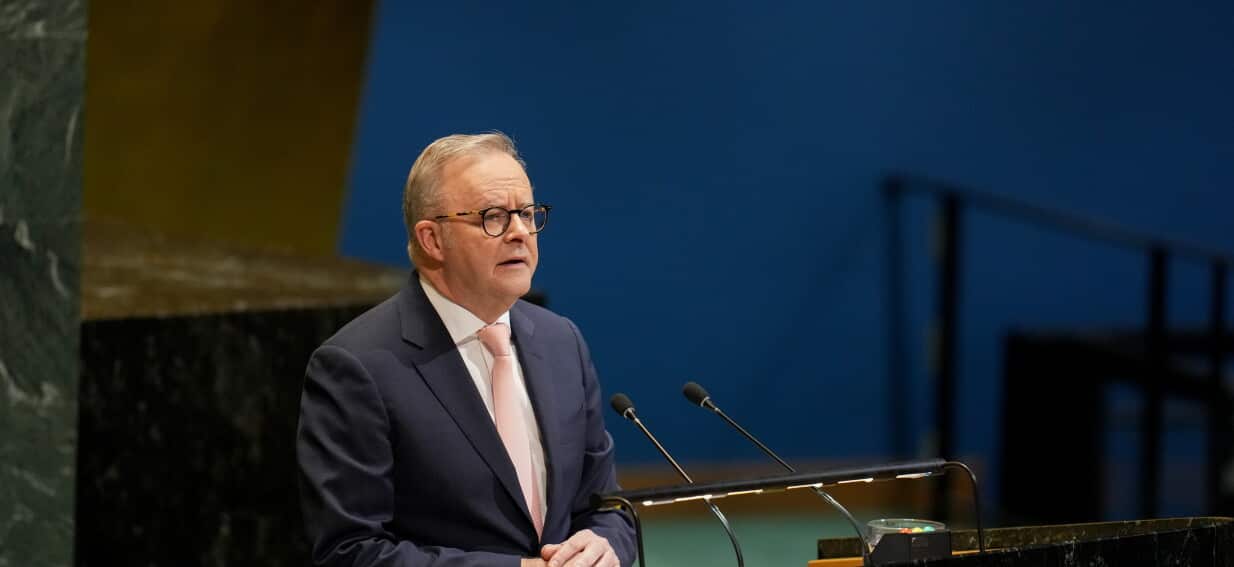
Prime Minister Anthony Albanese is heading to New York with a diplomatic pitch that has been more than a decade in the making: Putting Australia back on the United Nations Security Council.
Australia is campaigning for a non-permanent seat on the council for 2029-30, which would mark its first stint on the powerful UN body since 2014.
The government says a seat would give Australia a stronger voice on decisions affecting the country and the region.
Australia's campaign is expected to focus on issues including artificial intelligence, cyber threats and online safety, as well as climate action, international law and support for Pacific nations.
The Security Council is one of the six main bodies of the United Nations and has primary responsibility for maintaining international peace and security.
Five of them are permanent members, while another 10 countries are elected by the UN General Assembly to serve two-year terms.
Australia would not gain that veto power if elected, as it belongs exclusively to the five permanent members of the Security Council.
During 2013-14, Australia participated in hundreds of council meetings, including closed meetings available only to members, and was closely involved in negotiating dozens of resolutions and presidential statements.
Its seat became following the downing of Malaysia Airlines flight MH17 over eastern Ukraine in July 2014 including 38 Australian citizens and residents.
Australia authored and led negotiations on Security Council Resolution 2166, which was unanimously adopted four days after the crash.
Australia belongs to the Western European and Others Group, or WEOG, and is seeking one of the group's two seats available for the 2029-30 term.