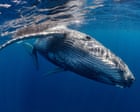
The behaviours we observed could represent grief, but they could also reflect maternal attachment, confusion or instinctive caregiving.
One day last July, a newborn humpback whale calf lay motionless on the seafloor, just a kilometre off Australia’s Gold Coast. The encounter was captured through underwater video.
For more than an hour, the mother repeatedly returned to the same spot, gently touching the calf with her head and pectoral fin and resting beside it eye-to-eye. Our new research suggests this is the first described case of a humpback whale mother caring for her dead newborn calf.
The encounter offers a window into one of the least understood aspects of whale behaviour: how these social animals respond to death.
Humpback whales are known for their migrations and acrobatic breaches. They are equally remarkable for the way they respond to other animals in distress.
Humpback whales often defend their calves from killer whales. Researchers have also observed them remaining alongside whales that are injured or entangled in nets, circling them, resting nearby and trying to help.
Dolphins and killer whales often remain close to distressed companions, evidence of their strong social bonds.
Whale mothers have repeatedly been observed carrying their dead calves for hours, days and, in cases, weeks. The most famous example is the killer whale Tahlequah500 kilometres. Scientists have observed similar behaviour in pilot whales and dolphins.
The research on baleen whales, including humpback whales, is scarce.
Humpback whale mothers give birth after almost a year of pregnancy and spend the next few months feeding their calf with nutrient-rich milk.