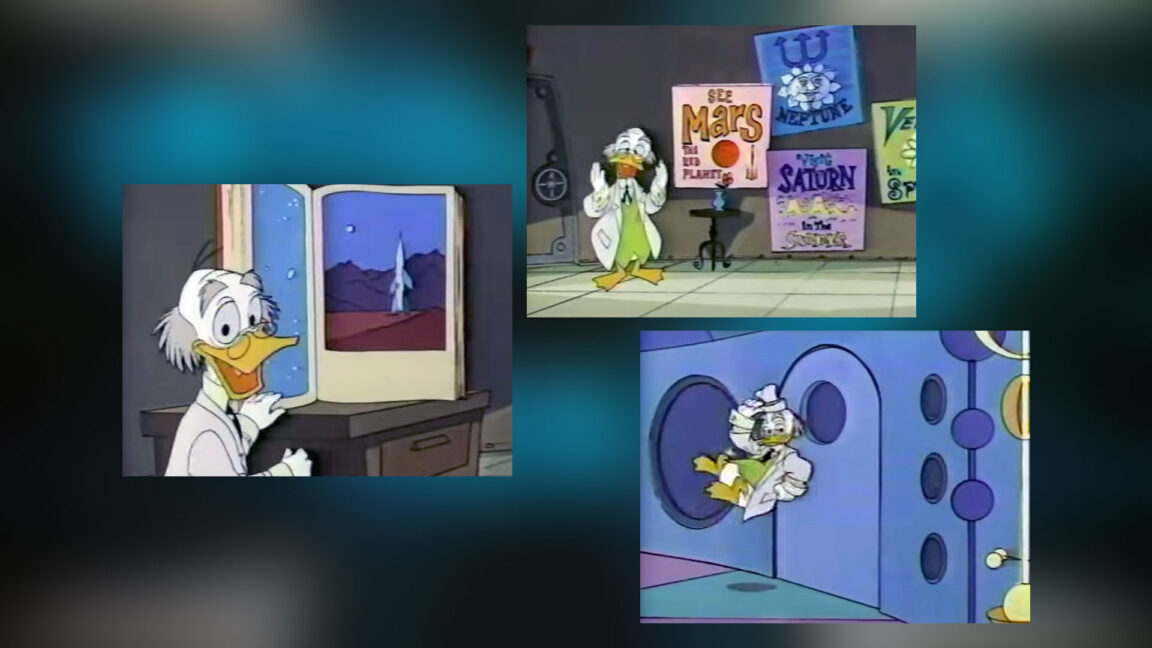
On this day 65 years ago (September 24, 1961), Disney introduced the “renowned scientist, lecturer, psychologist [and] world traveler,” Ludwig Von Drake.
The show reused animation from earlier Disneyland TV episodes, “Man and the Moon,” “Man in Space,” and “Mars and Beyond,” which first aired on December 4, 1957, two months after the launch of the world’s first artificial satellite.
With an Austrian accent provided by Paul Frees, Von Drake drew from Haber and Ley’s breadth of knowledge and von Braun’s expertise and personality.
3 sentences from our version of the report,
chosen to cover it. Nothing here is written; every line is in the article below.
How
Summarized version
Von Braun, Haber, and Ley are also said to have influenced Disney, writer Bill Berg, and animator Milt Kahl when they decided on Von Drake’s name and character.
The report’s most important sentence, shortened and in plain words. How
Headline check
All three things this headline claims are in the report.
Figures, names and quoted words in the headline, looked for in the report itself — not in the summary above. How this is checked
The article, shortened and in plain language
On this day 65 years ago (September 24, 1961), Disney introduced the “renowned scientist, lecturer, psychologist [and] world traveler,” Ludwig Von Drake. A member of the Duck family (he is the “brilliant and eccentric” uncle of Donald Duck), Von Drake was “the outstanding genius of the century” (per Disney himself) who helped to explain scientific principles and technological concepts to the millions of people who tuned in every Sunday to watch Walt Disney’s Wonderful World of Color on NBC.
A few years later, after expertly (but often absent-mindedly) addressing topics such as how color television works, the health benefits of exercising, and the history of aviation, Von Drake dove into the topic for which he said he wrote the book on, in the February 10, 1963, episode “Inside Outer Space.”
As it turns out, Von Drake was not wrong—well, maybe not about the cost of his book, but about the part about being obsolete. The show reused animation from earlier Disneyland TV episodes, “Man and the Moon,” “Man in Space,” and “Mars and Beyond,” which first aired on December 4, 1957, two months after the launch of the world’s first artificial satellite.
Von Braun, Haber, and Ley are also said to have influenced Disney, writer Bill Berg, and animator Milt Kahl when they decided on Von Drake’s name and character. With an Austrian accent provided by Paul Frees, Von Drake drew from Haber and Ley’s breadth of knowledge and von Braun’s expertise and personality.
Shortened to 1 minute
of reading, this version reads 1.5 on the Niral Score.
You are reading our version, not theirs.
This is Ars Technica's report shortened to its most important sentences, in plainer words, with
verdicts and loaded words taken out. Plain description stays, and so do adjectives
that carry a fact, such as "former" or "federal". The reporting, the facts and the quotations
are theirs — quotations are never edited — and the indicators beside it measure
this version. Hover or tap Adjectives to see every one left in the text.
How this outlet filed it, and how we rewrote it
No other newsroom we read has filed on this event, so there is nothing to compare it with yet.
Readers can ask a question about this story here.
Questions and answers are for subscribers.
Sign in
to read them.
Comments are read before they appear where anything in them needs a person to look.
Nothing posted here is ever deleted; a comment taken down keeps its text and the reason,
so the decision can be looked at again. How this works