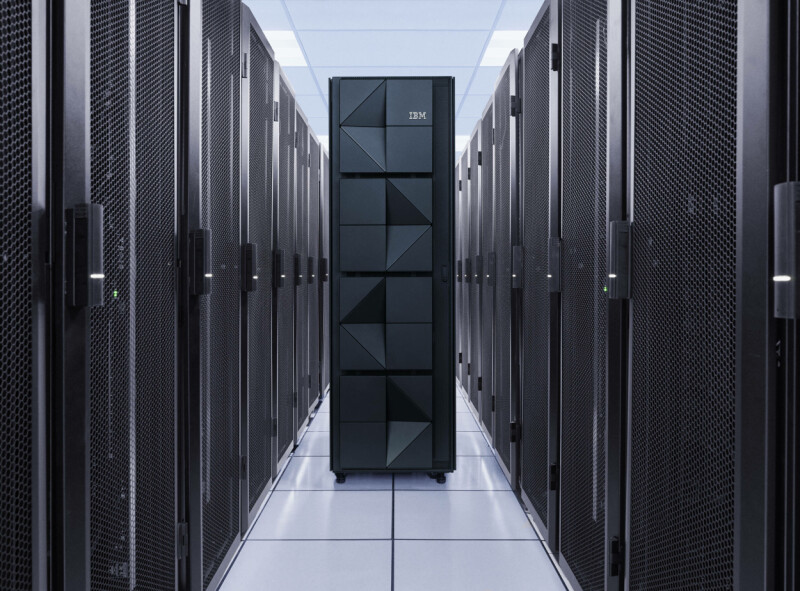
Hardware such as mainframes found to hold the data and business logic needed to build those AI services
Companies are getting more selective about replacing legacy kit such as mainframe systems, and rising AI investment is one of the factors causing them to hold onto these existing assets for longer.
Managed services biz Ensono claims in its 2026 State of IT Modernization report that 78 percent of IT decision makers regard legacy systems as more important today than they did two years ago, and this is because such systems are viewed as key to making AI work for their organization.
The report is based on a survey of 500 IT decision-makers and line-of-business leaders conducted by the firm across the US and UK.
Its findings show that AI is reshaping modernization priorities, but that corporates are still grappling with many of the challenges that have traditionally complicated modernization efforts, such as budget overruns, delayed initiatives, and talent shortages.
Ensono found that 45 percent of firms are actively scaling AI deployments across their organization, while 44 percent are investing in targeted, high-impact use cases.
Supporting AI, automation, and advanced data initiatives is now the top pressure driving modernization, while more than half of companies say that AI is helping advance modernization by delivering through greater automation and improved efficiency.
Among the barriers businesses face, the top challenges to achieving AI goals are said to be difficulty integrating AI into existing workflows and business processes (33 percent of respondents) and infrastructure limitations (28 percent).
For this reason, Ensono says that those legacy systems are taking on new strategic value as organizations attempt to scale their AI rollout. Nearly half of organizations view legacy systems such as mainframes as a foundation for AI and a source of data for this purpose, while 47 percent use them selectively for specific AI applications.
More than half of organizations are optimizing and extending legacy systems while modernizing applications where they are, rather than replacing them outright. This is an approach that’s more common in the UK (57 percent of respondents) than the US (48 percent).
“Enterprises are discovering that legacy systems, like the mainframe, are intensely powerful, reliable and efficient sources of computing that can now be augmented and made more agile thanks to AI,” says Ensono’s Chief Strategy Officer Brian Klingbeil.
“These systems contain decades of data and business logic that drive many companies. The advantage will go to organizations that understand their environments well enough to distinguish what should be replaced versus what should be augmented, and embrace new modernization methods that simply were not available even 18 months ago.”
However, using the mainframe as a foundation for AI rollouts was noted by infrastructure services firm Kyndryl two years ago. It found that big iron was becoming a prime candidate to host and run AI workloads, while enterprises were integrating their mainframes with modern infrastructure.
This meant moving some workloads off the mainframe while updating others in place to continue to benefit from the security and reliability of the platform.
Analyst Gartner also said earlier this year that migrating workloads to a mainframe made more sense for VMware users than adopting Broadcom’s new licenses.
Elsewhere, HPE managing director for UK, Middle East and Africa said that enterprise customers are opting to sweat IT assets for longer, moving refresh cycles from five years to seven years, for example.
“I think we're seeing earlier planning for critical projects. I think a lot of customers are looking much further ahead on their roadmap of spend at the things they have to do, because maybe some technology is going end of support or the lease is expiring at the datacenter,” he said.
“So I think you're seeing a decision tree of, do we pause here, and do we sweat the asset for a little bit longer, or is this essential to move ahead? I think it's fundamentally forcing a rethink for customers.” ®