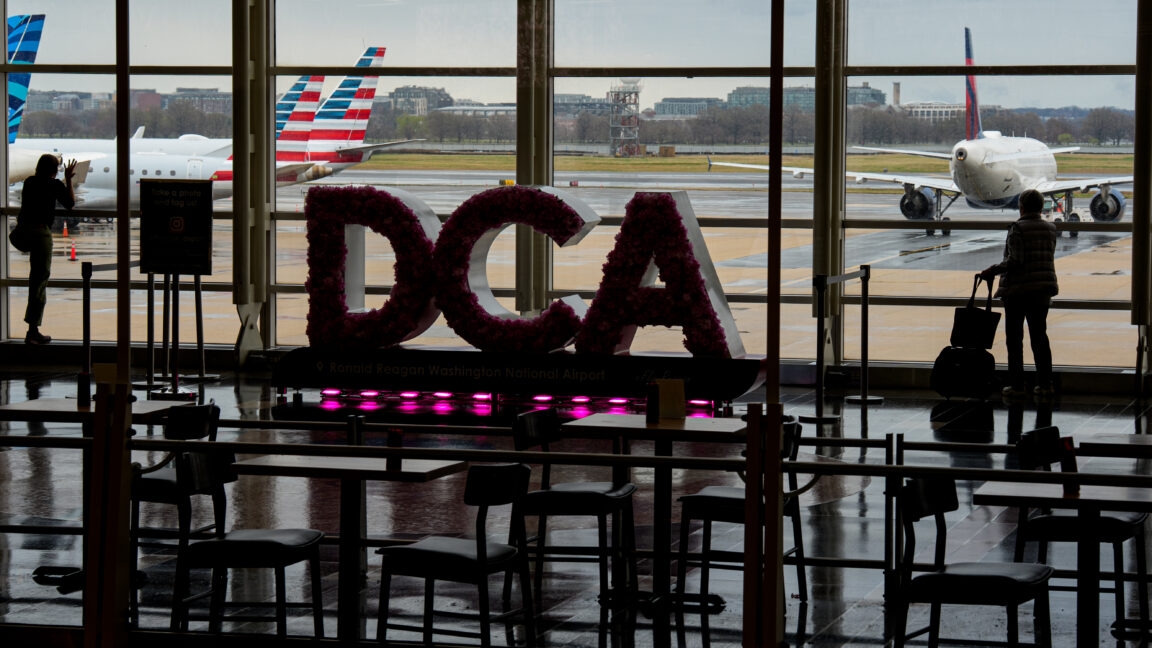
An AI tool is set to start advising air traffic controllers on managing air traffic in the congested airspace above the Washington, DC, area.
US government and industry officials told The Wall Street Journal that SMART could debut for the three airports in the Washington, DC, area as soon as Monday, September 21.
SMART is part of an $875 million, 12-year contract awarded to the Boston-based company Air Space Intelligence in June.
3 sentences from our version of the report,
chosen to cover it. Nothing here is written; every line is in the article below.
How
Summarized version
A fatal reminder came on January 29, 2025.
Headline check
There is nothing in this headline a machine can check against the report: no figure, no name and no quotation.
An AI tool is set to start advising air traffic controllers on managing air traffic in the congested airspace above the Washington, DC, area. The expected launch would be the first step toward a planned nationwide rollout covering the 29 million square miles of US national airspace overseen by the Federal Aviation Administration.
The FAA describes the SMART system as using AI models to predict air traffic flows and identify potential conflicts based on operational factors like airline schedules, weather, airport capacity, and airspace conditions. US government and industry officials told The Wall Street Journal that SMART could debut for the three airports in the Washington, DC, area as soon as Monday, September 21.
Anonymous airline officials told Politico that their concerns only eased after the FAA said the SMART AI tool would not change any procedures for air traffic controllers or airlines, and would instead produce “alternative route information” that is made available through existing FAA systems.
SMART is part of an $875 million, 12-year contract awarded to the Boston-based company Air Space Intelligence in June.
Air Space Intelligence claims its separate Flyways AI platform already helps manage over 40 percent of all US air traffic through partnerships with customers like Alaska Airlines.
Transportation Secretary Sean Duffy claimed 15 to 20 air traffic controllers were retiring each day during the shutdown compared to an average of four per day, and FAA chief Bryan Bedford described the agency as losing up to 500 air traffic controller trainees during the period.
Shortened to 1 minute
of reading, this version reads 8.1 on the Niral Score.
You are reading our version, not theirs.
This is Ars Technica's report shortened to its most important sentences, in plainer words, with
verdicts and loaded words taken out. Plain description stays, and so do adjectives
that carry a fact, such as "former" or "federal". The reporting, the facts and the quotations
are theirs — quotations are never edited — and the indicators beside it measure
this version. Hover or tap Adjectives to see every one left in the text.
How this outlet filed it, and how we rewrote it
No other newsroom we read has filed on this event, so there is nothing to compare it with yet.
Readers can ask a question about this story here.
Questions and answers are for subscribers.
Sign in
to read them.
Comments are read before they appear where anything in them needs a person to look.
Nothing posted here is ever deleted; a comment taken down keeps its text and the reason,
so the decision can be looked at again. How this works