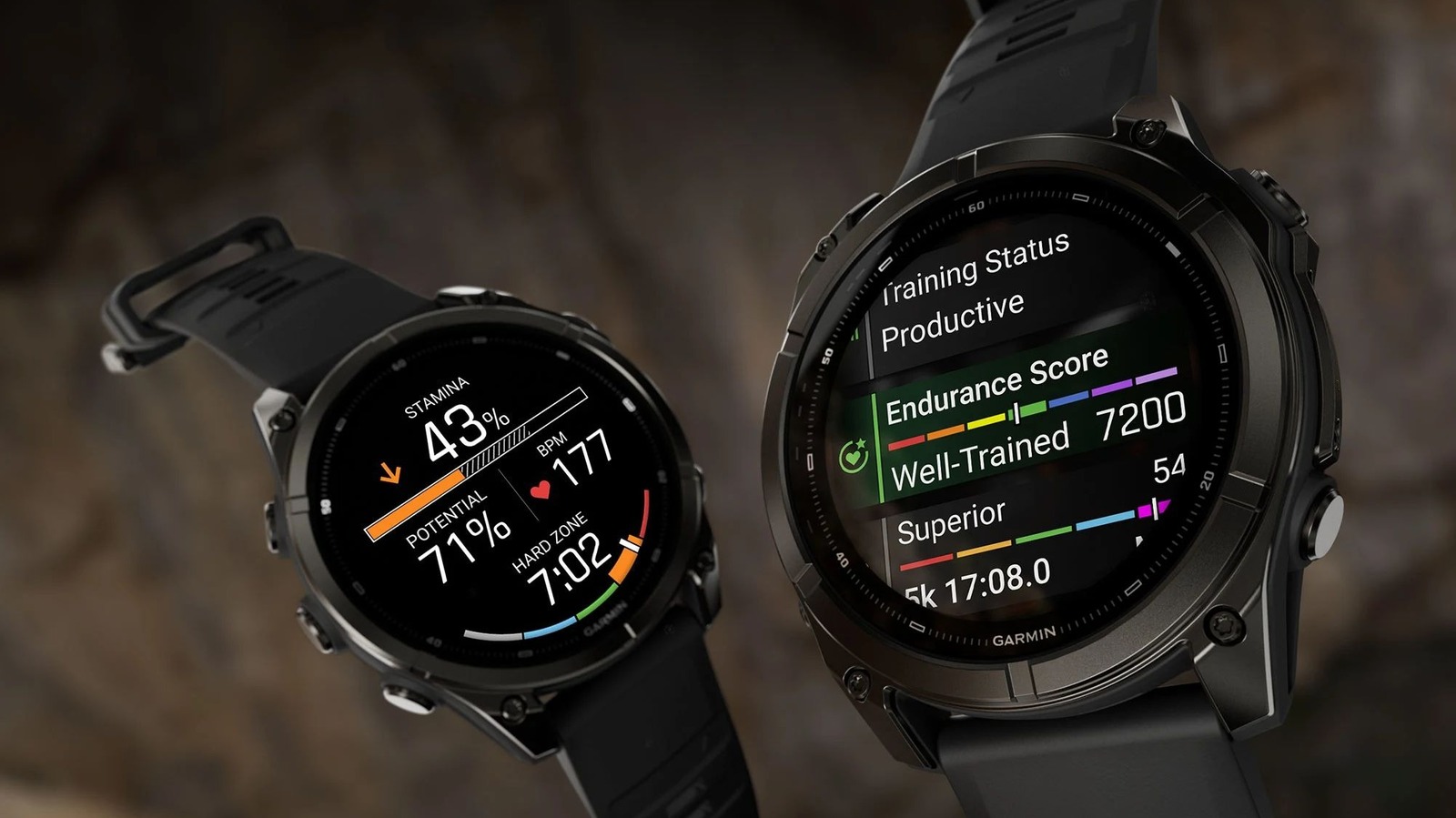
Like all Garmin Fenix models before it, this one's built for athletes and outdoor adventurers who want to take on everything from ultramarathons to mountain climbing to open-water diving.
The new Fenix starts at $999.99 and goes up to $1,099.99 for the 51mm size.
Garmin did not disclose the specific number of nits for the Fenix 8's AMOLED screen, but it does say the Fenix 9 Pro version reaches up to 3,000 nits of brightness, so a bit of math suggests the Fenix 8 came in below that.
The Fenix 9 doubles the Fenix 8's capacity to 64GB, letting you download twice as many apps and store up to 7,000 songs from your Spotify, Deezer or Amazon Music accounts.
4 sentences from our version of the report,
chosen to cover it. Nothing here is written; every line is in the article below.
How
Summarized version
Garmin did not disclose the specific number of nits for the Fenix 8's AMOLED screen, but it does say the Fenix 9 Pro version reaches up to 3,000 nits.
The report’s most important sentence, shortened and in plain words. How
Headline check
All four things this headline claims are in the report.
Figures, names and quoted words in the headline, looked for in the report itself — not in the summary above. How this is checked
The article, shortened and in plain language
Like all Garmin Fenix models before it, this one's built for athletes and outdoor adventurers who want to take on everything from ultramarathons to mountain climbing to open-water diving.
For instance, during the week that the Fenix 9 launched, you could get the 43mm Fenix 8 on sale for $850. The new Fenix starts at $999.99 and goes up to $1,099.99 for the 51mm size.
The smartwatch features an AMOLED display that Garmin says is "twice as bright" as the Fenix 8's. As a refresher, the Fenix 8 was the first of its family to feature an AMOLED panel (the Fenix 7 and 7 Pro used "Sunlight-visible, transflective memory-in-pixel (MIP)" displays).
Garmin did not disclose the specific number of nits for the Fenix 8's AMOLED screen, but it does say the Fenix 9 Pro version reaches up to 3,000 nits of brightness, so a bit of math suggests the Fenix 8 came in below that. For context, the Apple Watch Ultra 4 and Pixel Watch 5 both go up to 3,000 nits at peak brightness as well.
When it comes to the case, the standard Fenix 9 keeps the same construction as the Fenix 8 had in its higher-end models, pairing a titanium bezel with a sapphire lens.
The Fenix 9 doubles the Fenix 8's capacity to 64GB, letting you download twice as many apps and store up to 7,000 songs from your Spotify, Deezer or Amazon Music accounts.
When it comes to map performance, Garmin also states that panning is up to 30 percent faster on the new Fenix 9, mostly thanks to a more powerful map engine.
Shortened to 1 minute
of reading, this version reads 6.4 on the Niral Score.
You are reading our version, not theirs.
This is Engadget's report shortened to its most important sentences, in plainer words, with
verdicts and loaded words taken out. Plain description stays, and so do adjectives
that carry a fact, such as "former" or "federal". The reporting, the facts and the quotations
are theirs — quotations are never edited — and the indicators beside it measure
this version. Hover or tap Adjectives to see every one left in the text.
How this outlet filed it, and how we rewrote it
No other newsroom we read has filed on this event, so there is nothing to compare it with yet.
Readers can ask a question about this story here.
Questions and answers are for subscribers.
Sign in
to read them.
Comments are read before they appear where anything in them needs a person to look.
Nothing posted here is ever deleted; a comment taken down keeps its text and the reason,
so the decision can be looked at again. How this works
 Engadget