Despite uncertainty about how human mimicry affects people, DeepMind fakes are here
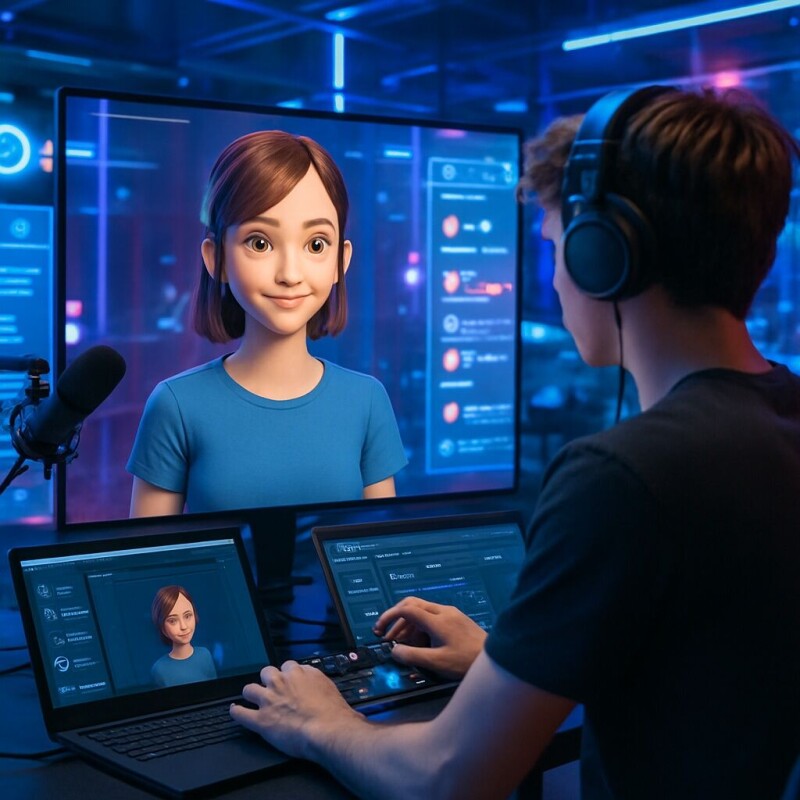
Google has augmented its live dialogue model Gemini 3.8 Live with a feature called "Live Avatar" that's capable of conjuring animated characters and realistic human simulacra to lip-sync Gemini's machine-generated speech.
"Conversation is inherently multimodal: we listen, look, speak, and use facial expressions to communicate," explained Shuo-yiin Chang, research scientist at Google DeepMind, and CJ Zheng, Gemini software engineer, in a blog post. "Live Avatar brings these capabilities to enterprise agents. By processing visual and audio inputs simultaneously, it generates enriching conversations for a more comprehensive experience."
Five years ago, DeepMind warned about various risks associated with the use of large language models, among them human interaction harms like anthropomorphising AI models – the attribution of human characteristics to software-based interactions. Anthropomorphism here applies broadly to visual human imitation as well as human-like speech and text.
"Anthropomorphizing [language models] may inflate users' estimates of the conversational agent’s competencies," noted the more than 20 authors of DeepMind's paper [PDF], "Ethical and social risks of harm from Language Models."
"For example, users may falsely infer that a conversational agent that appears human-like in language also displays other human-like characteristics, such as holding a coherent identity over time, or being capable of empathy, perspective-taking, and rational reasoning. As a result, they may place undue confidence, trust, or expectations in these agents."
That was in 2021. In August 2025, the risks posed by humanizing AI reached the courtroom when the parents of Adam Raine sued OpenAI, alleging [PDF] that ChatGPT contributed to their son's suicide. Among other things, the complaint lays blame on "anthropomorphic mannerisms calibrated to convey human-like empathy."
By December 2025, Google boffins were still grappling with the need to understand the impact of humanizing AI.
In a paper [PDF] titled "How Tech Workers Contend with Hazards of Humanlikeness in Generative AI," Mark Díaz, Renee Shelby, Eric Corbett, and Andrew Smart from Google Research reported that tech workers participating in focus groups expressed similar reservations to those cited in the company's prior work.
"Tech workers expressed significant concern that humanlikeness fosters a false sense of reliability and trust shaping their concerns as both users and developers, linking to fluid, natural language and tone, which can obscure errors," they wrote.
So even as Google AI researchers highlight the need to understand how the "humanlikeness" of AI relates to perceived hazards and responsible AI development, Google Gemini Enterprise is moving straight to deployment.
Live Avatars can be drawn from a pre-made library of characters or a custom avatar can be deployed if enterprise allow-listing is enabled.
Noting how Live Avatar can make tool calls and fetch data in the background, as well as converse in 97 languages, making it suitable for scenarios like handling hotel guest check-ins, Chang and Zheng insist that Google created these Gemini-generated personas with trust and safety in mind.
"We built Live Avatar with strict safeguards designed to respect identity, and keep AI-generated content transparent," they said. ®