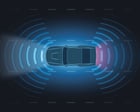
Modern cars are fitted with features like autonomous emergency braking and fatigue monitoring.
Peer sideways for too long checking traffic and the car emits an irritating sound.
From the back seat, salesperson Anthony says it’s the over-speed warning. We’re still on the 40km/h service road but the car “saw” the yard’s 5km/h speed-limit sign.
As driver, you were more or less in control of the car. The result was an Australian road death-rate in 1975 of 26.6 deaths per 100,000 people.
Evidence suggests advanced driver-help systems are one reason for this improvement.
Monash University’s Accident Research Centre has identified distraction and drowsiness contributing to about 40% of crashes resulting in hospital visits in Victoria. Associate Prof Michael Fitzharris estimates that the introduction of Adas, including autonomous emergency braking, to Victoria’s passenger and light commercial fleet could prevent 40,000 serious traffic injuries over 30 years.
The federal government’s response has been to mandate lane-keeping help technology and AEB on all passenger vehicles imported into Australia from 1 March 2029.
The Australasian New Car Assessment Program has identified deficiencies with Adas, and in March announced new design protocols for driver-interface technology for the next three years.
In cooperation with the European New Car Assessment Programme, Ancap will now penalise vehicles with intrusive, confusing or poorly calibrated safety systems.
In a 2026 study, using a sample of 60 Australian drivers, researchers at the University of Delft concluded that use of Adas leads to the degradation of manual driving skills, with drivers showing increased risk-taking and decreased cognitive and physical engagement.