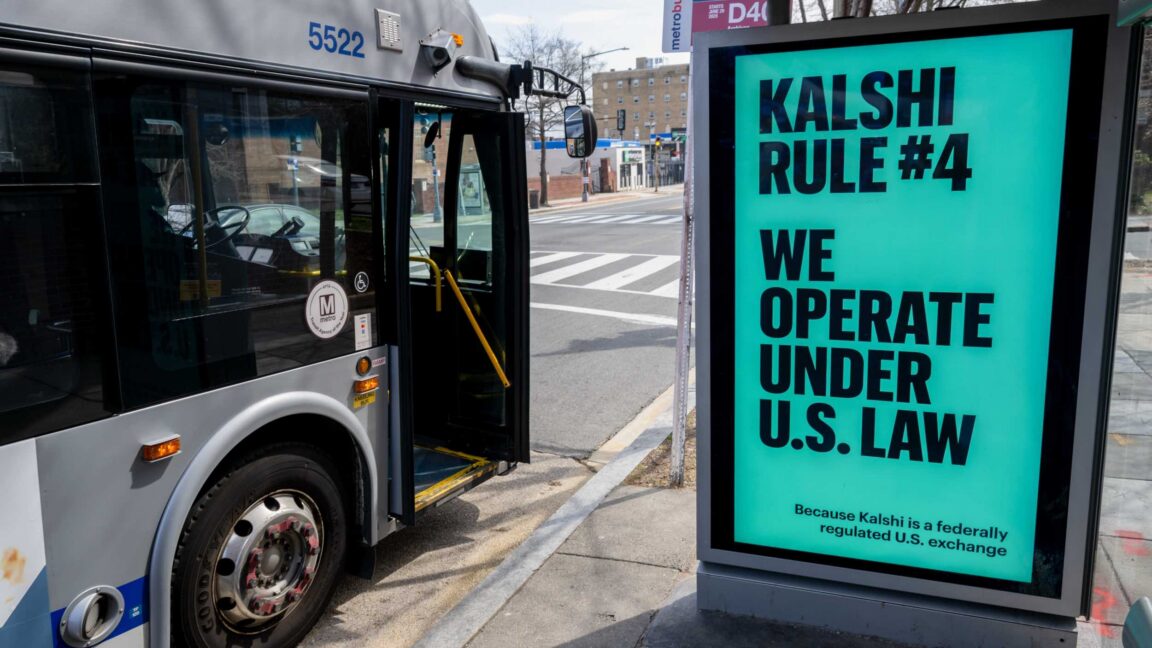
On Friday, a three-judge panel in the US Court of Appeals for the Sixth Circuit ruled unanimously against Kalshi and in favor of Ohio and Tennessee.
The court found that even if Kalshi wagers were swaps, the regulatory scheme created by Congress would not prohibit states from enforcing gambling laws on prediction markets.
Many states are trying to stop or restrict gambling on Kalshi, which offers sports betting throughout the US despite not getting state gambling licenses or paying state gambling taxes.
The Sixth Circuit was the third federal appeals court to rule on whether states can regulate gambling on Kalshi.
4 sentences from our version of the report,
chosen to cover it. Nothing here is written; every line is in the article below.
How
Summarized version
The court found even if Kalshi wagers were swaps, the regulatory scheme created by Congress would not prohibit states from enforcing gambling laws on prediction markets.
Headline check
There is nothing in this headline a machine can check against the report: no figure, no name and no quotation.
Another federal appeals court has ruled that states can enforce their gambling laws against the prediction market Kalshi, which asserts that it can only be regulated by the US government. On Friday, a three-judge panel in the US Court of Appeals for the Sixth Circuit ruled unanimously against Kalshi and in favor of Ohio and Tennessee.
While the US Commodity Futures Trading Commission has exclusive jurisdiction over “swaps,” the judges found that sports wagers offered on Kalshi do not meet the legal definition of swaps. The court found that even if Kalshi wagers were swaps, the regulatory scheme created by Congress would not prohibit states from enforcing gambling laws on prediction markets.
Kalshi sued Ohio and Tennessee after gambling regulators in each state showed they would bring enforcement actions against the prediction market. The appeals court ruling on Friday upheld an Ohio district court decision against Kalshi and vacated a Tennessee district court order that went in favor of Kalshi.
Many states are trying to stop or restrict gambling on Kalshi, which offers sports betting throughout the US despite not getting state gambling licenses or paying state gambling taxes. Kalshi offers sports bets in some states where gambling on sports is illegal and in other states where the law has restrictions on betting that Kalshi does not follow.
The Sixth Circuit was the third federal appeals court to rule on whether states can regulate gambling on Kalshi.
State governments now have two victories to Kalshi’s one, and a Fourth Circuit case involving Maryland is still pending.
Shortened to 1 minute
of reading, this version reads 7.5 on the Niral Score.
You are reading our version, not theirs.
This is Ars Technica's report shortened to its most important sentences, in plainer words, with
verdicts and loaded words taken out. Plain description stays, and so do adjectives
that carry a fact, such as "former" or "federal". The reporting, the facts and the quotations
are theirs — quotations are never edited — and the indicators beside it measure
this version. Hover or tap Adjectives to see every one left in the text.
How this outlet filed it, and how we rewrote it
No other newsroom we read has filed on this event, so there is nothing to compare it with yet.
Readers can ask a question about this story here.
Questions and answers are for subscribers.
Sign in
to read them.
Comments are read before they appear where anything in them needs a person to look.
Nothing posted here is ever deleted; a comment taken down keeps its text and the reason,
so the decision can be looked at again. How this works