NASA must be more selective in the way it forges international partnerships as the race to the Moon transforms from a battle for national prestige between the United States and China into a high-stakes competition for extraterrestrial real estate and resources, the agency’s administrator said.
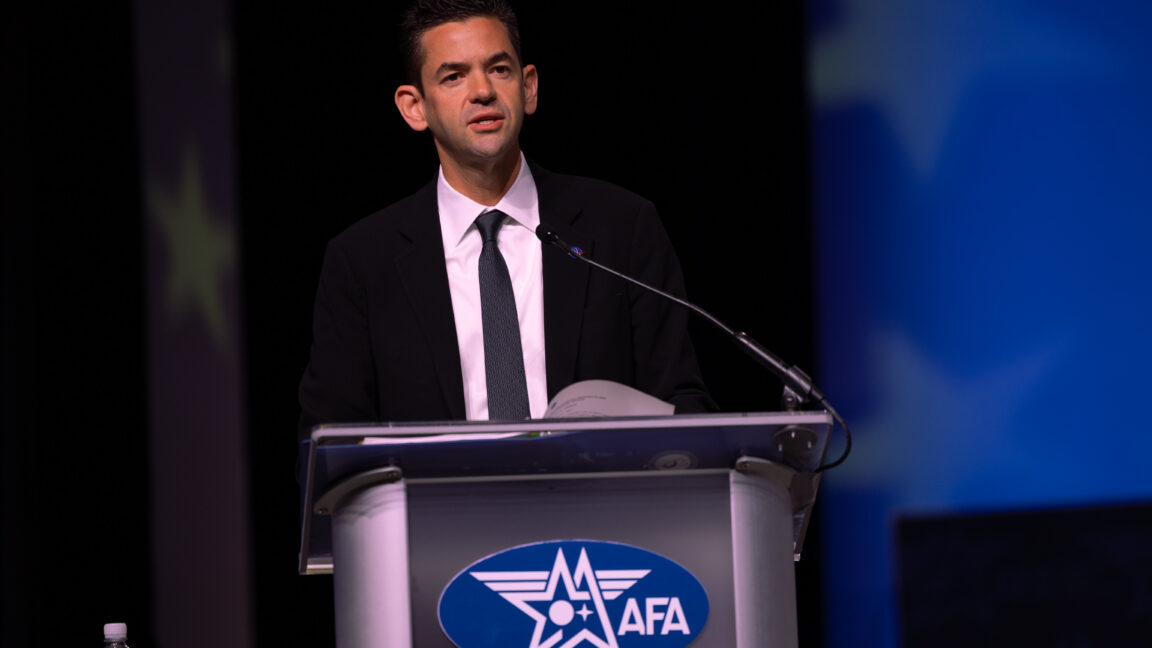
Jared Isaacman, now in his 10th month at the helm of the world’s largest civilian space agency, told a gathering of military leaders and defense contractors last week near Washington, DC, that the 21st-century race to the Moon is more than a battle of ideologies. The sweet spot for a Moon base, Isaacman said, is a relatively small region near the lunar south pole, and there are tangible implications for who gets there first.
“It’s a big Moon, with the surface area of Africa,” Isaacman said Wednesday at the Air & Space Forces Association’s Air, Space & Cyber Conference.
Isaacman said this means NASA must make better decisions on when and how to work with international partners. Other nations have a place in NASA’s programs, but only if they can meaningfully contribute to the mission, he said.
Isaacman singled out as a good deal NASA’s agreement with the Italian government in March for the development of living quarters for astronauts on the Moon.
Japan, too, is coming in clutch for NASA, Isaacman said, with a multibillion-dollar commitment to develop a pressurized rover to ferry astronauts across the Moon.
NASA announced in June that ESA astronaut Luca Parmitano, a colonel in the Italian Air Force, will serve as pilot on the Artemis III mission to test lunar landers and the Orion spacecraft in low-Earth orbit in 2027.