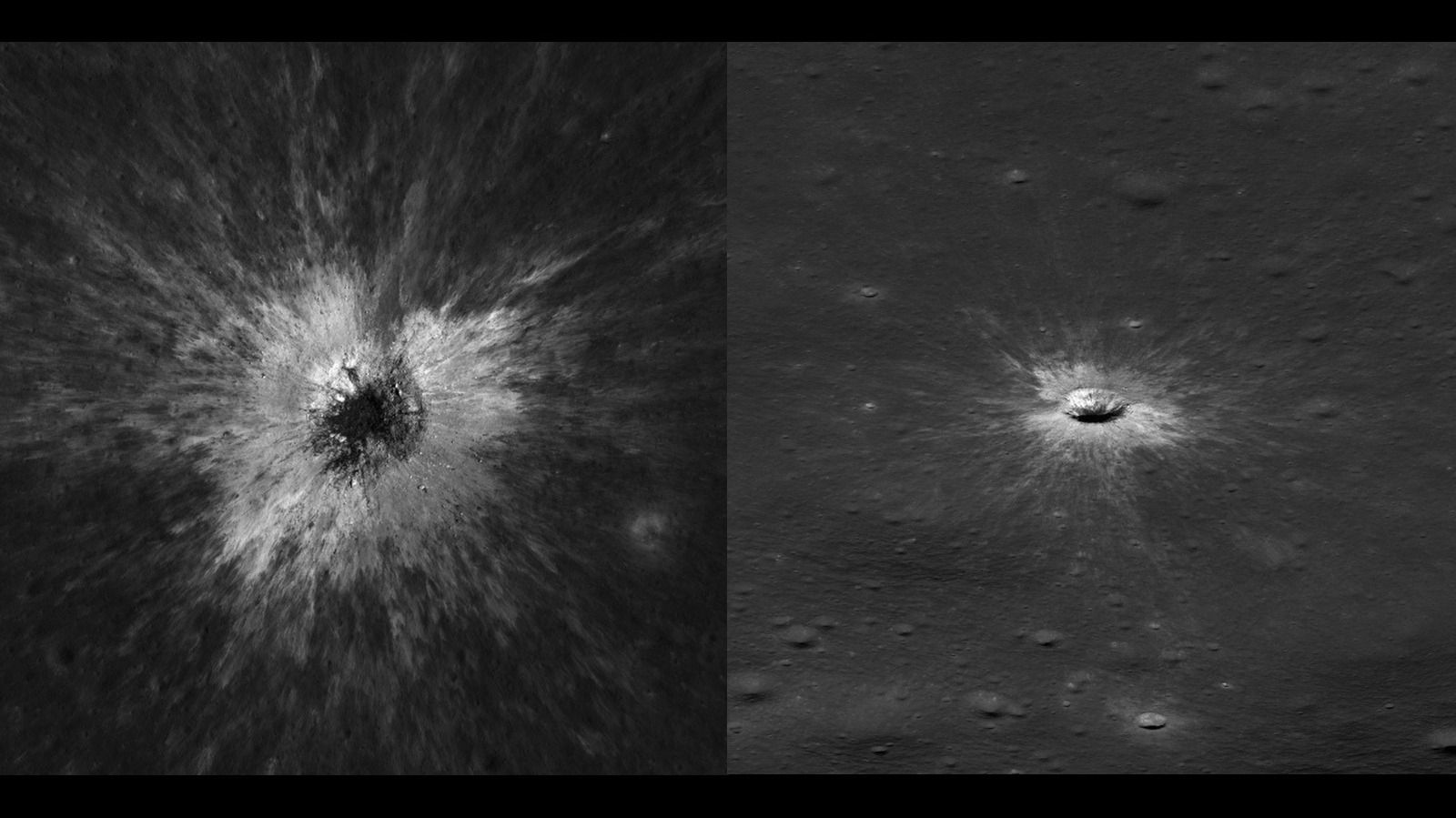
NASA scientist Robert Wagner noticed a change on the moon's surface while looking at images taken by the orbiter's wide-angle camera in October 2025.
To be clear, the McGetchin crater isn't the largest crater on the moon.
The images you see above were taken by the LRO's narrow-angle camera after it flew over the impact site again in December 2025, a few months after Wagner spotted it.
3 sentences from our version of the report,
chosen to cover it. Nothing here is written; every line is in the article below.
How
Summarized version
A team of scientists who has already studied it found there's a 4-mile-wide area in its surroundings that's about 16 degrees Fahrenheit cooler at night.
Headline check
There is nothing in this headline a machine can check against the report: no figure, no name and no quotation.
It’s the largest modern-day crater in our solar system, NASA says.
NASA scientist Robert Wagner noticed a change on the moon's surface while looking at images taken by the orbiter's wide-angle camera in October 2025. After comparing before and after photos, he was able to confirm that there was indeed a new lunar crater, which was then officially named after scientist Tom McGetchin.
To be clear, the McGetchin crater isn't the largest crater on the moon. Most lunar impacts are small, and most of them are ancient. Based on scientists' estimates, an impact of this magnitude happens only once every 132 years or so.
The images you see above were taken by the LRO's narrow-angle camera after it flew over the impact site again in December 2025, a few months after Wagner spotted it.
Shortened to 1 minute
of reading, this version reads 10.3 on the Niral Score.
You are reading our version, not theirs.
This is Engadget's report shortened to its most important sentences, in plainer words, with
verdicts and loaded words taken out. Plain description stays, and so do adjectives
that carry a fact, such as "former" or "federal". The reporting, the facts and the quotations
are theirs — quotations are never edited — and the indicators beside it measure
this version. Hover or tap Adjectives to see every one left in the text.
How this outlet filed it, and how we rewrote it
No other newsroom we read has filed on this event, so there is nothing to compare it with yet.
Readers can ask a question about this story here.
Questions and answers are for subscribers.
Sign in
to read them.
Comments are read before they appear where anything in them needs a person to look.
Nothing posted here is ever deleted; a comment taken down keeps its text and the reason,
so the decision can be looked at again. How this works
 Engadget