 Engadget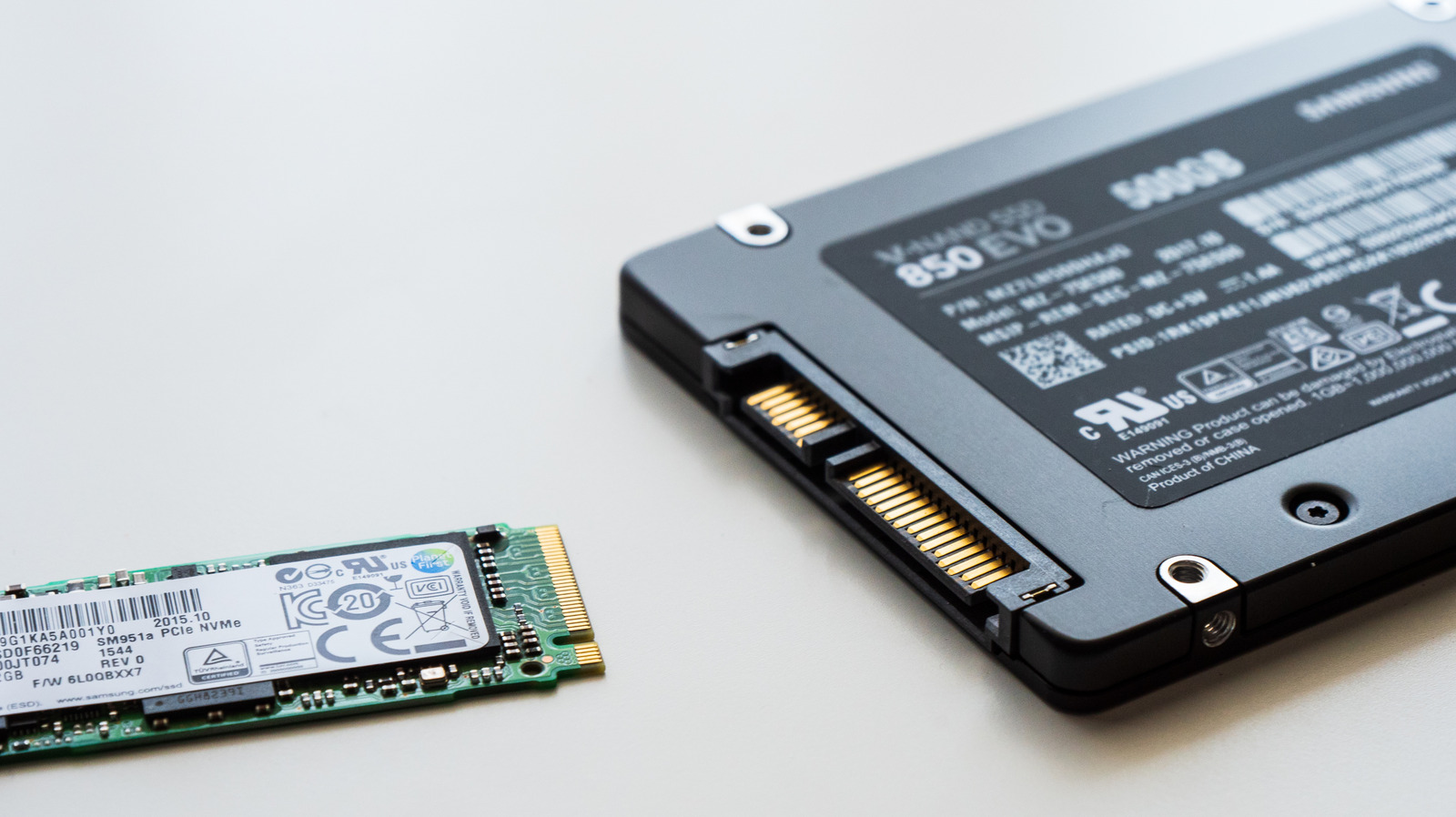
NVMe has the numbers, but SATA still has a few good reasons to stick around.
While mechanical hard drives have been superseded in performance by SSDs, there's still another decision to make when buying an SSD: SATA or NVMe.
SATA is the older standard and its SATA III specification has a theoretical maximum of 600 MB/s, although fast consumer drives generally run around 500 to 560 MB/s. NVMe was built specifically for solid-state storage and normally communicates over PCIe.
SATA SSDs typically use AHCI, a protocol developed for an older generation of storage, while NVMe was designed for the parallel workloads that flash storage enables and communicates through PCIe. Not all motherboards wire all M.2 slots the same. Most high-performance M.2 NVMe SSDs use four PCIe lanes, written as x4.
Another M.2 slot on the same motherboard may provide only two lanes, written as x2, or run at an older PCIe generation such as Gen4.
A drive might boast large sequential speeds, but if the slot only provides two lanes instead of four, part of the advertised performance remains out of reach.
M.2 only describes the form factor, while NVMe is the connection type; SATA-based M.2 drives exist alongside NVMe models.
If your PC supports it, NVMe is the more sensible primary drive option.
Moving from an SATA SSD to NVMe won't make the rest of your computer scale with the max performance number.
In contrast, Microsoft lists a NVMe SSD as a Windows 11 requirement for storing and running games that use DirectStorage.