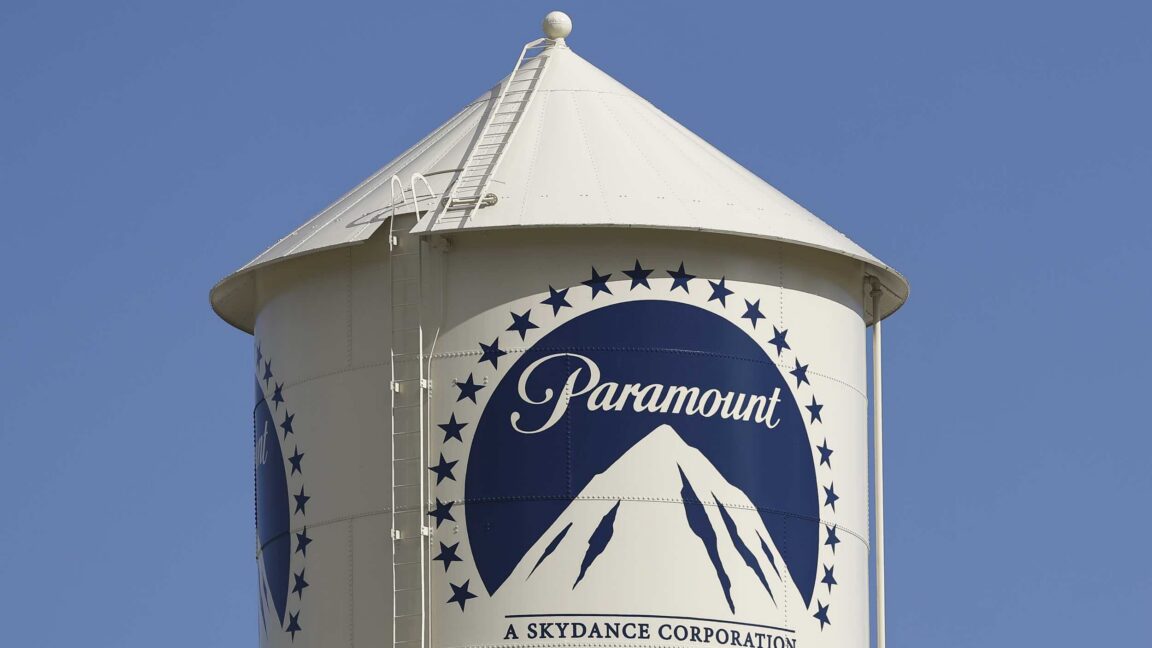
Free speech and media advocacy groups urged a judge to block a California settlement with Paramount Skydance that would let the company finalize its $111 billion merger with Warner Bros. Discovery.
A coalition of free speech and media advocacy groups told the judge in a filing yesterday that the deal will give residents of the states that sued Paramount “virtually nothing.”
The League of United Latin American Citizens raised similar concerns in its own court filing.
Warner Bros. Projected it would release 19 films while Paramount forecast 15 or more, the filing said.
4 sentences from our version of the report,
chosen to cover it. Nothing here is written; every line is in the article below.
How
Headline check
The one thing this headline claims is in the report.
Figures, names and quoted words in the headline, looked for in the report itself — not in the summary above. One claim in this headline could be checked, so this is a narrow pass and not a thorough one. How this is checked
The article, shortened and in plain language
Free speech and media advocacy groups urged a judge to block a California settlement with Paramount Skydance that would let the company finalize its $111 billion merger with Warner Bros. Discovery.
Twelve states led by California sued to block the deal in July and were able to delay it when US District Judge Araceli Martínez-Olguín ruled that Paramount combining with Warner Bros. Would likely reduce competition and violate antitrust laws. Despite that initial victory, California Attorney General Rob Bonta announced a settlement with Paramount earlier this week and the other states involved in the lawsuit signed on to the deal.
A coalition of free speech and media advocacy groups told the judge in a filing yesterday that the deal will give residents of the states that sued Paramount “virtually nothing.” The filing was submitted by the Committee for the First Amendment, Free Press, Freedom of the Press Foundation, Future Film Coalition, and International Documentary Association.
The League of United Latin American Citizens raised similar concerns in its own court filing.
At a hearing yesterday in US District Court for the Northern District of California, Martínez-Olguín told lawyers that “the court isn’t a rubber stamp of your agreement… I have some questions,” Variety reported.
Martínez-Olguín asked the parties to submit replies to a letter sent by Sen. Cory Booker (D-N.J.), who said the companies should be needed to explain “how each provision remedies each harm alleged in the complaint.”
Warner Bros. Projected it would release 19 films while Paramount forecast 15 or more, the filing said.
Shortened to 1 minute
of reading, this version reads 3.2 on the Niral Score.
You are reading our version, not theirs.
This is Ars Technica's report shortened to its most important sentences, in plainer words, with
verdicts and loaded words taken out. Plain description stays, and so do adjectives
that carry a fact, such as "former" or "federal". The reporting, the facts and the quotations
are theirs — quotations are never edited — and the indicators beside it measure
this version. Hover or tap Adjectives to see every one left in the text.
How this outlet filed it, and how we rewrote it
No other newsroom we read has filed on this event, so there is nothing to compare it with yet.
Readers can ask a question about this story here.
Questions and answers are for subscribers.
Sign in
to read them.
Comments are read before they appear where anything in them needs a person to look.
Nothing posted here is ever deleted; a comment taken down keeps its text and the reason,
so the decision can be looked at again. How this works