 Engadget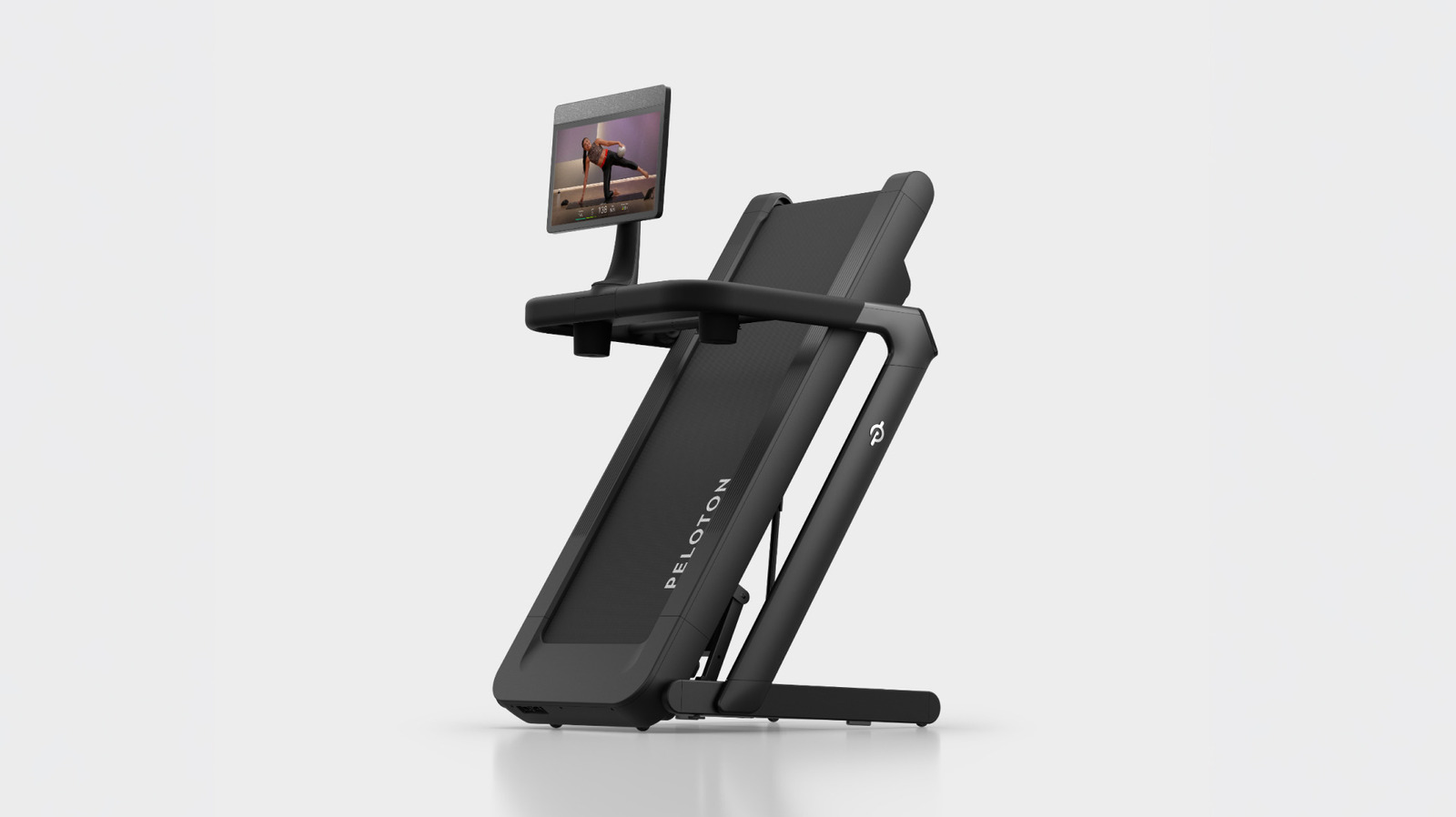
The Tread Flex is the company's first fold-up treadmill, and also its cheapest to date.
Peloton is refreshing its machines for fall 2026, and this time it's going all-in on treadmills with three different Tread models aimed at three different tax brackets/ types of runner. I briefly got to see the Tread Vision in person during IFA in Berlin, but Peloton didn't have the $2,195 Tread Flex on display then. While the two pricier models (the $3,495 Tread Vision and $6,695 Tread+ Vision) may tempt more road-hardened runners thanks to their bigger screens, sturdier running decks and new running analysis feature, it's the Tread Flex that's the most interesting proposition for rookies like me.
The Tread Flex is the company's cheapest-ever treadmill, with its debut Tread launching for around $4,000 over 8 years ago. It's also the first one that can fold up, vertically, making it roughly half the footprint of other treadmills. It's also mounted on wheels so it can be moved around and repositioned, with a two-step release to gradually lower the running deck and a locking pin to prevent it from falling open when stored upright.
Peloton claims the Flex will still run relatively quietly, outputting 70 dB at 12.5 mph at max speed. However, that number is without someone running on it, which, as anyone who's lived with someone who uses a treadmill at home will tell you, is where most of the noise is made.
While it may be a cheaper treadmill, the Tread Flex doesn't appear to have been too compromised. It still has a pivoting screen, which is smaller than the 23.8-inch screen on the Tread Vision models. The Tread Flex has a 21.5-inch Full HD screen, like the company's older treadmills. It doesn't have the built-in Sonos speakers of its pricier siblings, either.
While it lacks the camera that Peloton's added to much all its newest fitness equipment, the Flex will still have access to Peloton IQ for training scheduling, feedback and coaching. This will include personalized Pace targets (levels 1–10) and heart-rate zone training, specifically at the challenging Zone 2 area. That last bit was one of the top requests from Peloton's devoted user base.
Peloton's IQ Pace targets will assess your recent running performance — it needs to monitor 10 running workouts first — before recommending personalized custom pace range adjustments.
Another cool feature coming to the Tread series are ReRuns, which grant the ability to transfer a run that you've tracked with either Peloton's app or your Apple Watch and map it to the Tread. It will mimic things like degrees of elevation as you tackle the route again.
If you want a more high-tech indoor run and want to improve performance, the Tread Vision has a lot going for it. The company's first computer vision-enabled treadmill uses its built-in camera to gauge and monitor running form, even offering post-run feedback that carries into future attempts, with cues and pointers generated at the start of your next run.
The run analysis will even produce an efficiency score for how well you're running. Peloton told me that the team worked with a biomechanics group that specializes in running and injury prevention to develop the run analysis feature. The camera attempts to track vertical oscillation, cadence and stride length to deliver this score and your personalized coaching tips. This feature will also arrive on the existing Cross-Training Tread+, which also has a camera.
Hardware-wise, the new Tread Vision will include a lot of the other features introduced on Peloton's Cross Training equipment, including a cooling fan, and (gasp!) Phone tray. Both the Vision and the Tread+ iteration have new Jump Buttons for instant adjustments to speed and incline settings. The company says the Tread Vision has improved deck cushioning with new dampeners for a gentler run, too.
For the most intense Peloton subscriber, the Tread+ Vision attempts to justify its $6,695 price with a slat-belt deck, a ball-bearing system for maximum impact protection. It's premium treadmill technology only found in the most expensive treadmills and is rare in home models. I imagine it's more likely to be found in more exclusive gyms like Equinox or Third Space.
It's also the only model that will offer Sled Mode. No adorable huskies here, though. Instead, the mode mimics the sled-push movement seen in cross-training classes and Hyrox competitions. (Poor Peloton got unlucky with its timing for a Hyrox collab.)
Sled mode uses software-controlled resistance: 30–300 lbs against the slat belt. The user pushes the Tread's track against this resistance. It's hard to imagine, but hopefully I can try it out once Peloton kits out its London studio with them.
Peloton also announced that starting today (September 22), users will be able to connect Whoop accounts directly to the Peloton App, if you wanted further proof that screenless fitness wearables are climbing in popularity everywhere.