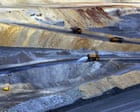
As minister says process needs to be ‘streamlined’, Greens and Lock the Gate say the legislation is ‘corrupt’ and tears up environmental protections.
The Greens have called the move “corrupt” and community action group Lock the Gate Alliance said the state’s LNP government was “tearing up democratic and environmental protections just to make life easier for mining companies”.
Queensland produces most of Australia’s coal and has the country’s second-largest mining industry, behind Western Australia.
In the case of mining leases, the decision-maker is the resources minister.
A spokesperson for the Oakey Coal Action Alliance, a group of local farmers which litigated the case for 11 years, said the group had won its right to be heard at the high court.
5 sentences from our version of the report,
chosen to cover it. Nothing here is written; every line is in the article below.
How
Summarized version
A spokesperson for the Oakey Coal Action Alliance, a group of local farmers which litigated the case for 11 years.
The report’s most important sentence, shortened and in plain words. How
Headline check
The one thing this headline claims is in the report.
Figures, names and quoted words in the headline, looked for in the report itself — not in the summary above. One claim in this headline could be checked, so this is a narrow pass and not a thorough one. How this is checked
The article, shortened and in plain language
As minister says process needs to be ‘streamlined’, Greens and Lock the Gate say the legislation is ‘corrupt’ and tears up environmental protections.
Queenslanders’ right to object to mining projects – including coal – would be “gutted” by new legislation that would ban opponents from being heard in court without the minister’s approval and then only if they owned a property within a 125km radius of the project.
The Greens have called the move “corrupt” and community action group Lock the Gate Alliance said the state’s LNP government was “tearing up democratic and environmental protections just to make life easier for mining companies”.
The state’s minister for natural resources, Dale Last, who tabled the legislation on Tuesday, said the bill was “about streamlining approvals and making faster decisions”.
Queensland produces most of Australia’s coal and has the country’s second-largest mining industry, behind Western Australia.
Under current law an objection to a mining project is automatically referred to the state’s land court for independent consideration.
In the case of mining leases, the decision-maker is the resources minister.
The government last year cancelled a months-long review of the laws dealing with objections to mining leases by the independent Queensland Law Reform Commission, weeks before it would have released its findings.
A spokesperson for the Oakey Coal Action Alliance, a group of local farmers which litigated the case for 11 years, said the group had won its right to be heard at the high court.
Queensland’s LNP government expanded objection rights against planning approvals for windfarms last year, and recently passed legislation permitting the government to compulsorily acquire land for coal mining.
Shortened to 1 minute
of reading, this version reads 5.8 on the Niral Score.
You are reading our version, not theirs.
This is The Guardian Australia's report shortened to its most important sentences, in plainer words, with
verdicts and loaded words taken out. Plain description stays, and so do adjectives
that carry a fact, such as "former" or "federal". The reporting, the facts and the quotations
are theirs — quotations are never edited — and the indicators beside it measure
this version. Hover or tap Adjectives to see every one left in the text.
How this outlet filed it, and how we rewrote it
No other newsroom we read has filed on this event, so there is nothing to compare it with yet.
Readers can ask a question about this story here.
Questions and answers are for subscribers.
Sign in
to read them.
Comments are read before they appear where anything in them needs a person to look.
Nothing posted here is ever deleted; a comment taken down keeps its text and the reason,
so the decision can be looked at again. How this works