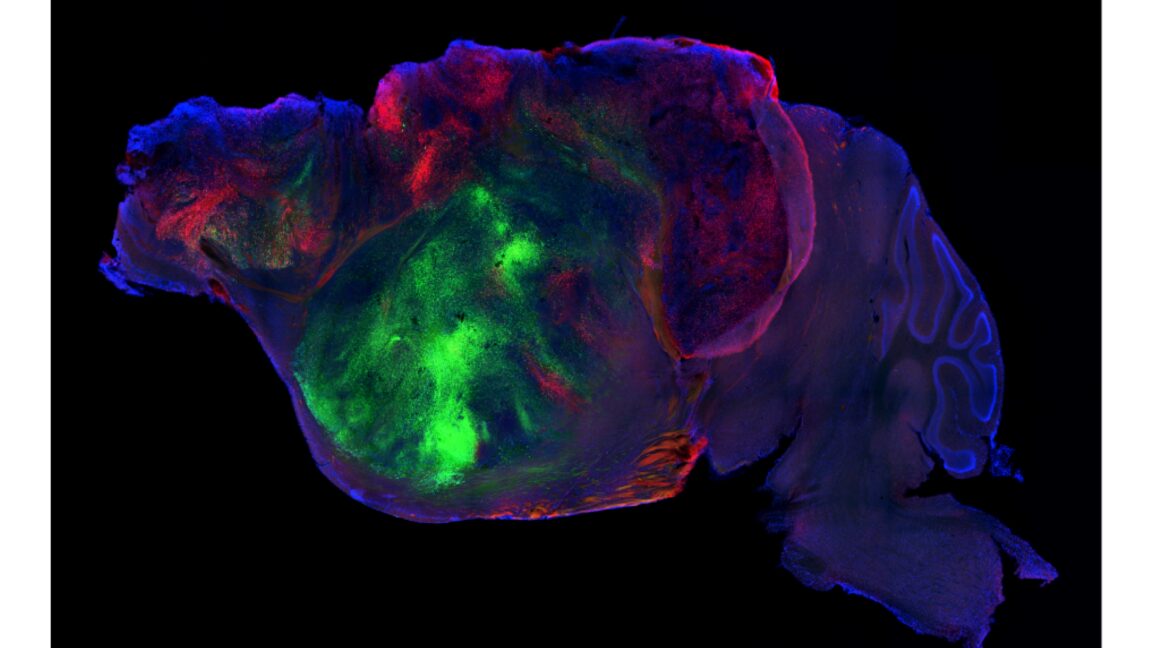
On Wednesday, a research group at Stanford University described a possible way to study brain organoids in a more natural context: They genetically wiped out a large portion of the mouse brain and replaced it with human brain organoid cells.
In the absence of normal mouse tissue, nothing would provide the human cells with the signals that help organize them into functional units.
The researchers found a gene that is active in almost all cortical cells and used it to drive the deletion of a gene that’s needed to separate chromosomes during cell division.
With that in place, the researchers then started implanting human cortex organoids into the area where the mouse’s cortex was no longer developing.
4 sentences from our version of the report,
chosen to cover it. Nothing here is written; every line is in the article below.
How
Summarized version
On Wednesday, a research group at Stanford University described a possible way to study brain organoids in a more natural context.
The report’s most important sentence, shortened and in plain words. How
Headline check
There is nothing in this headline a machine can check against the report: no figure, no name and no quotation.
In recent years, there has been a lot of excitement about the potential for studying human diseases in what are called “organoids.”
On Wednesday, a research group at Stanford University described a possible way to study brain organoids in a more natural context: They genetically wiped out a large portion of the mouse brain and replaced it with human brain organoid cells.
One alternative has been to implant human neural stem cells into the brains of another species, where they’ll generally integrate into the nervous system and actively signal to their neighbors.
The solution there is to get rid of the host cells and try to have the human cells take over their functions. In the absence of normal mouse tissue, nothing would provide the human cells with the signals that help organize them into functional units.
The Stanford team decided to test a compromise and delete a portion of the mouse’s brain and put human brain organoids in its place. The researchers found a gene that is active in almost all cortical cells and used it to drive the deletion of a gene that’s needed to separate chromosomes during cell division.
Amazingly, despite killing off most of the cells that should go on to form the mature cortex and cutting the brain’s volume in half, it was possible for the mice to survive this. (The mice were also immunocompromised to avoid an immune reaction to human cells, but this is less of an issue in a sterile mouse care facility.).
With that in place, the researchers then started implanting human cortex organoids into the area where the mouse’s cortex was no longer developing.
Shortened to 1 minute
of reading, this version reads 16.2 on the Niral Score.
You are reading our version, not theirs.
This is Ars Technica's report shortened to its most important sentences, in plainer words, with
verdicts and loaded words taken out. Plain description stays, and so do adjectives
that carry a fact, such as "former" or "federal". The reporting, the facts and the quotations
are theirs — quotations are never edited — and the indicators beside it measure
this version. Hover or tap Adjectives to see every one left in the text.
How this outlet filed it, and how we rewrote it
No other newsroom we read has filed on this event, so there is nothing to compare it with yet.
Readers can ask a question about this story here.
Questions and answers are for subscribers.
Sign in
to read them.
Comments are read before they appear where anything in them needs a person to look.
Nothing posted here is ever deleted; a comment taken down keeps its text and the reason,
so the decision can be looked at again. How this works