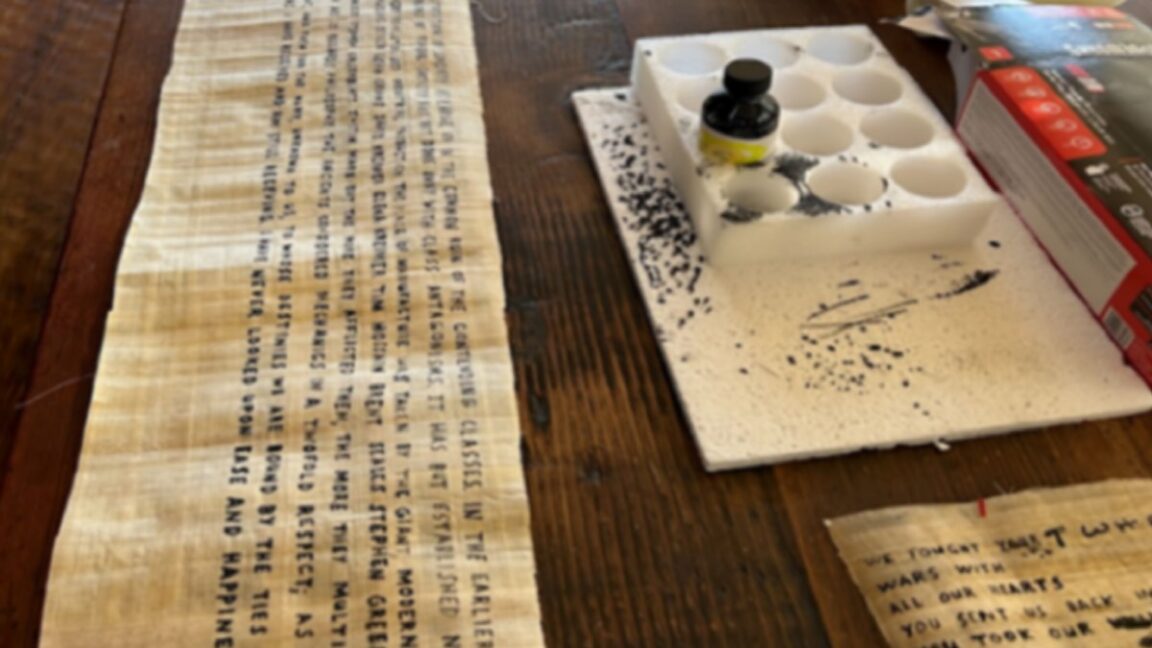
The Vesuvius Challenge is an ongoing project that combines “digital unwrapping” with crowdsourced machine learning to decipher the so-called Herculaneum scrolls, badly charred 2,000-year-old papyri too fragile to be physically unrolled.
As before reported, the ancient Roman resort town of Pompeii wasn’t the only city destroyed in the 79 AD eruption of Mount Vesuvius.
The scrolls stayed buried under volcanic mud until they were excavated in the 1700s from a single room that archaeologists believe held the personal working library of an Epicurean philosopher named Philodemus.
Brent Searles’ lab at the University of Kentucky has been working on deciphering the Herculaneum scrolls for many years.
In 2016, scientists identified letters in two fragments of a scroll that contained lead, suggesting that some of the scrolls might be written in lead-based ink.
5 sentences from our version of the report,
chosen to cover it. Nothing here is written; every line is in the article below.
How
Summarized version
As before reported, the ancient Roman resort town of Pompeii wasn’t the only city destroyed in the 79 AD eruption of Mount Vesuvius.
The report’s most important sentence, shortened and in plain words. How
Headline check
There is nothing in this headline a machine can check against the report: no figure, no name and no quotation.
The Vesuvius Challenge is an ongoing project that combines “digital unwrapping” with crowdsourced machine learning to decipher the so-called Herculaneum scrolls, badly charred 2,000-year-old papyri too fragile to be physically unrolled. A team of researchers created their own contemporary model papyrus scrolls—charring them just like the originals—to validate a screening method to determine which of the Herculaneum scrolls were written in lead-based ink and hence are the most promising candidates for further analysis.
As before reported, the ancient Roman resort town of Pompeii wasn’t the only city destroyed in the 79 AD eruption of Mount Vesuvius. One palatial home in Herculaneum—believed to have once belonged to a man named Piso—contained hundreds of priceless written scrolls made from papyrus, singed into carbon by volcanic gas.
The scrolls stayed buried under volcanic mud until they were excavated in the 1700s from a single room that archaeologists believe held the personal working library of an Epicurean philosopher named Philodemus. The few opened fragments helped scholars identify various Greek philosophical texts, including On Nature by Epicurus and several by Philodemus himself, as well as a handful of Latin works.
Brent Searles’ lab at the University of Kentucky has been working on deciphering the Herculaneum scrolls for many years. The so-called En Gedi scroll was recovered from the ark of an ancient synagogue destroyed by fire around 600 CE.
In 2016, scientists identified letters in two fragments of a scroll that contained lead, suggesting that some of the scrolls might be written in lead-based ink.
Shortened to 1 minute
of reading, this version reads 11 on the Niral Score.
You are reading our version, not theirs.
This is Ars Technica's report shortened to its most important sentences, in plainer words, with
verdicts and loaded words taken out. Plain description stays, and so do adjectives
that carry a fact, such as "former" or "federal". The reporting, the facts and the quotations
are theirs — quotations are never edited — and the indicators beside it measure
this version. Hover or tap Adjectives to see every one left in the text.
How this outlet filed it, and how we rewrote it
No other newsroom we read has filed on this event, so there is nothing to compare it with yet.
Readers can ask a question about this story here.
Questions and answers are for subscribers.
Sign in
to read them.
Comments are read before they appear where anything in them needs a person to look.
Nothing posted here is ever deleted; a comment taken down keeps its text and the reason,
so the decision can be looked at again. How this works