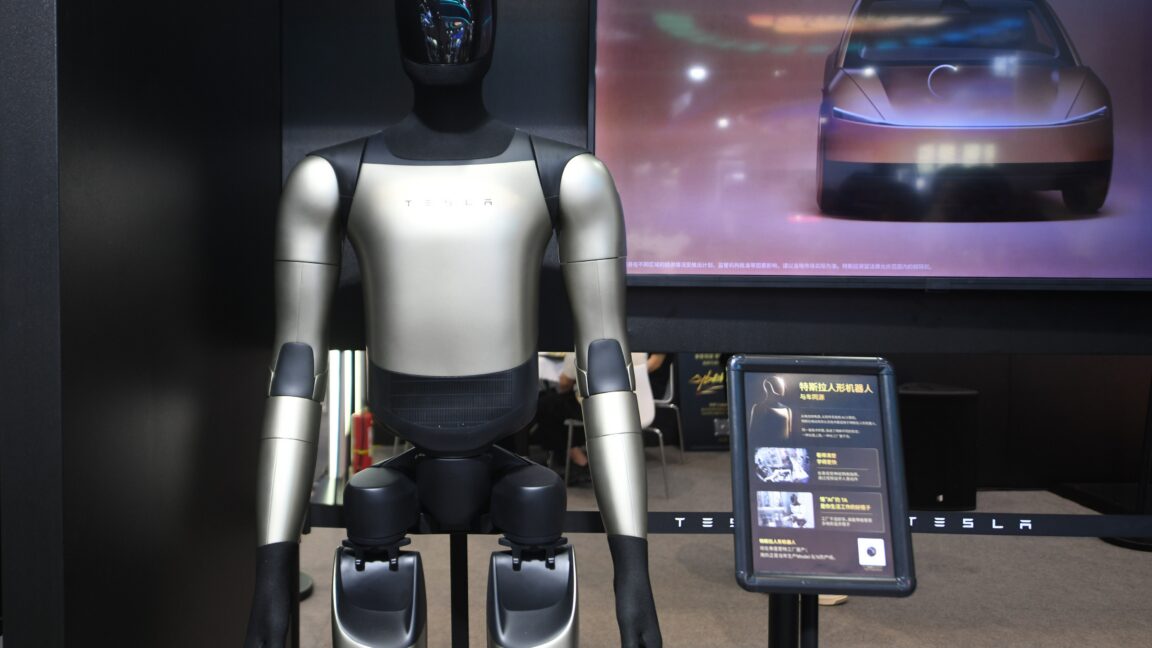
Tesla’s pivot from making electric cars to humanoid robots is facing challenges because of robot hands and disgruntled workers pushing back against training their robotic replacements.
As someone who often makes claims that fail to materialize, Musk has described the Optimus humanoid robot as potentially “the biggest product ever” during Tesla’s second-quarter 2026 earnings call.
The complexity of such robotic hands has translated into more production headaches for Tesla as human workers must manually assemble Optimus hands and forearms that together have more than 100 small components such as screws.
In July, the Federal Communications Commission banned new foreign-made robots such as humanoid robots and four-legged robot dogs, along with robot vacuum cleaners.
4 sentences from our version of the report,
chosen to cover it. Nothing here is written; every line is in the article below.
How
Headline check
The one thing this headline claims is in the report.
Figures, names and quoted words in the headline, looked for in the report itself — not in the summary above. One claim in this headline could be checked, so this is a narrow pass and not a thorough one. How this is checked
The article, shortened and in plain language
Tesla’s pivot from making electric cars to humanoid robots is facing challenges because of robot hands and disgruntled workers pushing back against training their robotic replacements. The struggle to scale up production comes as Tesla CEO Elon Musk has bet the company’s future on AI and robotics.
As someone who often makes claims that fail to materialize, Musk has described the Optimus humanoid robot as potentially “the biggest product ever” during Tesla’s second-quarter 2026 earnings call.
Tesla’s Fremont factory in California has already stopped making the Model S sedan and Model X SUV as of May 2026, with the company switching both line workers and engineers over to working on Optimus, according to The Information.
Tesla and many other automakers and robotics companies are betting that humanoid robots coupled with advances in AI models could eventually unlock general-purpose robots that can handle a diverse array of tasks while fitting into human workplaces.
The complexity of such robotic hands has translated into more production headaches for Tesla as human workers must manually assemble Optimus hands and forearms that together have more than 100 small components such as screws.
One of The Information’s sources described Tesla’s Optimus robots as now needing programming to do specific tasks in carefully controlled environments.
In July, the Federal Communications Commission banned new foreign-made robots such as humanoid robots and four-legged robot dogs, along with robot vacuum cleaners.
One of the companies furthest along in commercial deployment of humanoid robots is Oregon-based Agility Robotics, which first put them to work at an Atlanta-area warehouse owned by GXO Logistics in 2024.
Shortened to 1 minute
of reading, this version reads 10.7 on the Niral Score.
You are reading our version, not theirs.
This is Ars Technica's report shortened to its most important sentences, in plainer words, with
verdicts and loaded words taken out. Plain description stays, and so do adjectives
that carry a fact, such as "former" or "federal". The reporting, the facts and the quotations
are theirs — quotations are never edited — and the indicators beside it measure
this version. Hover or tap Adjectives to see every one left in the text.
How this outlet filed it, and how we rewrote it
No other newsroom we read has filed on this event, so there is nothing to compare it with yet.
Readers can ask a question about this story here.
Questions and answers are for subscribers.
Sign in
to read them.
Comments are read before they appear where anything in them needs a person to look.
Nothing posted here is ever deleted; a comment taken down keeps its text and the reason,
so the decision can be looked at again. How this works