Tesla CEO Elon Musk has insisted investors think of his electric automaker as a robotics and autonomous vehicle company now.
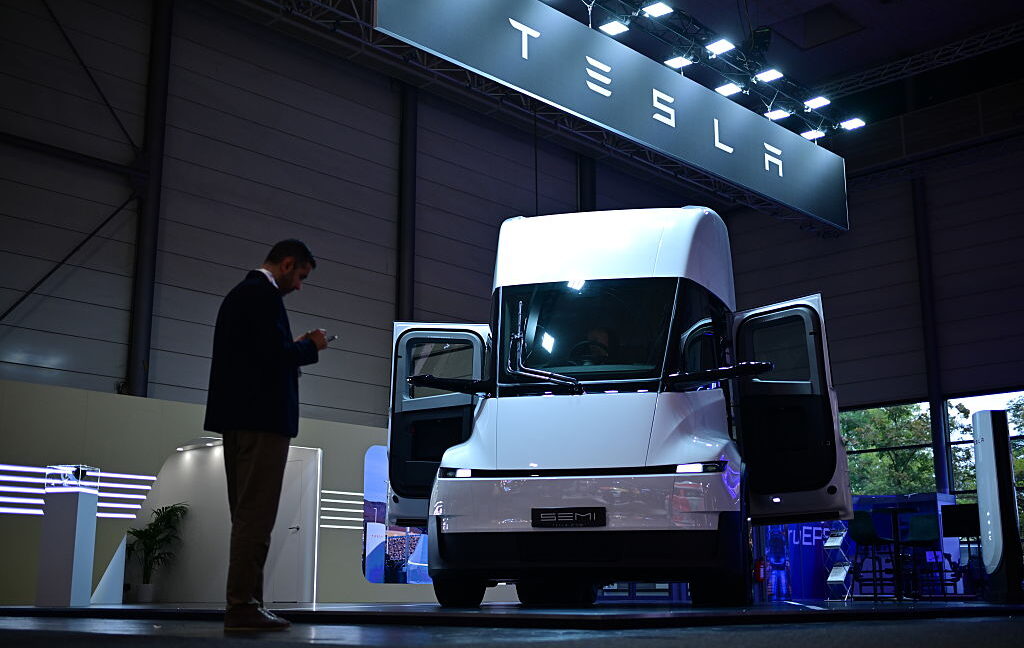
The Semi concept first rolled onto a Tesla event stage in late 2017. Nearly a decade later, Tesla officially launched high-volume production at a livestreamed but invite-only event at the company’s factory.
Musk said in a pre-taped video played during the evening event. (Musk, for years the ringmaster at Tesla’s circus-like events, skipped his second vehicle debut in a row; he was attending a White House China State Dinner featuring President Xi Jinping.).
The long-range version of the Semi will travel an estimated 500 miles per charge, Lars Moravy, Tesla’s vice president of Vehicle Engineering, confirmed at the event—around the average number of miles traveled by US long-haul truckers each day. Competitor EVs advertise ranges of 155 to 430 miles.
The Tesla Semi has its work cut out for it.
While electrics account for nearly 30 percent of heavy-duty truck sales in China, according to state media, they’ve had a slow start in the US, as manufacturers struggle to make the vehicles competitive with their traditional diesel-burning counterparts. Dan Priestley says the company plans to open 30 by the end of the year.
Plus, the Trump administration and the GOP—the same group Musk spent millions to get into the White House— cut billions in federal support for electric vehicles last year.
Full Self-Driving (Supervised), Tesla’s driver help feature, will not yet be available on the Semi, though Musk said in his address that it would debut in “the very near future.”