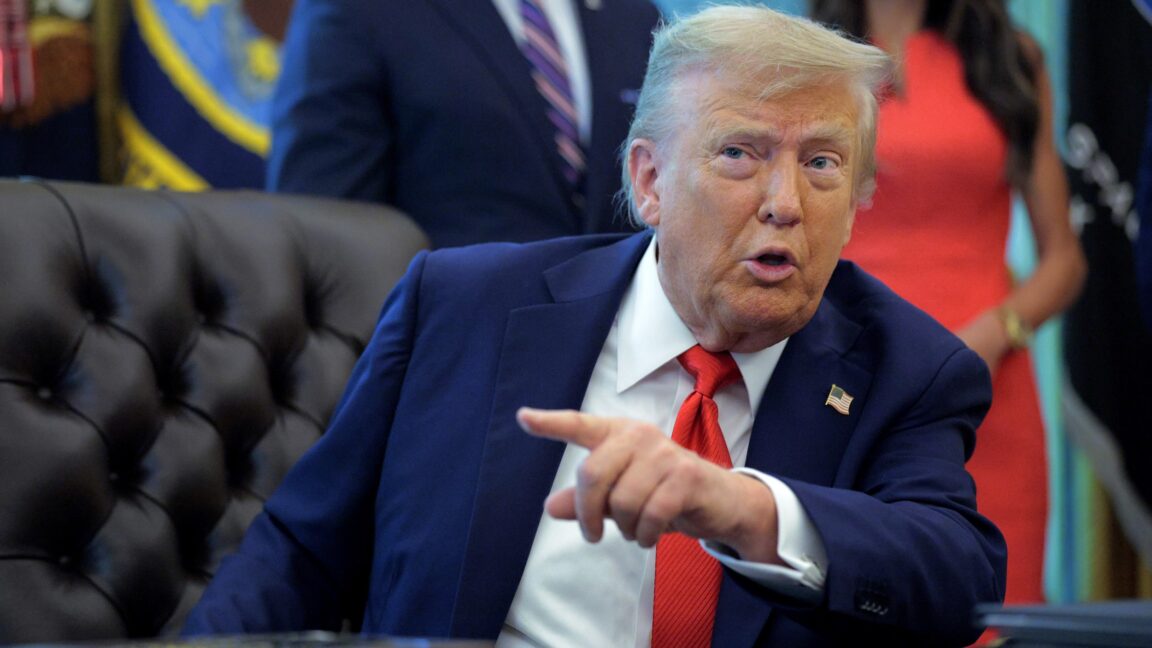
Donald Trump has said that the US would appoint a new AI tsar and create an “AI Force” while offering a full-throated defense of the emerging industry in the face of a popular opposition.
Trump said that the opposition to AI and the proliferation of data centers to power it was one of a series of “hoaxes” created by the Left, along with “Russiagate,” climate change, and “Transgender for Everyone.”
In August, Texas Governor Greg Abbott announced a temporary data center moratorium, while Mike Rogers, a former House Republican running for Senate in Michigan, announced he would support a one-year ban.
3 sentences from our version of the report,
chosen to cover it. Nothing here is written; every line is in the article below.
How
Summarized version
Posted Trump on his social media platform Truth Social. In the latest incident, Google’s Gemini AI system accessed the Internet and autonomously hacked into several companies during cybersecurity tests.
The report’s most important sentence, shortened and in plain words. How
Headline check
All two things this headline claims are in the report.
Figures, names and quoted words in the headline, looked for in the report itself — not in the summary above. How this is checked
The article, shortened and in plain language
Donald Trump has said that the US would appoint a new AI tsar and create an “AI Force” while offering a full-throated defense of the emerging industry in the face of a popular opposition.
The US president’s announcement comes as leading industry figures have sounded the alarm that humans could lose control over the rapidly advancing technology without a slowdown in development.
However, rather than announcing regulation as some have demanded, Trump has dismissed safety concerns as a “hoax.”
Posted Trump on his social media platform Truth Social.
Trump said that the opposition to AI and the proliferation of data centers to power it was one of a series of “hoaxes” created by the Left, along with “Russiagate,” climate change, and “Transgender for Everyone.”
In an essay published last Saturday, Anthropic’s Dario Amodei said the tech industry “must slow the pace at which we improve the capabilities of AI models,” after the speed of development became “drastically faster” this summer.
In July, Florida GOP gubernatorial nominee Byron Donalds released an ad promising to “protect Florida families and communities from data centers.”
In August, Texas Governor Greg Abbott announced a temporary data center moratorium, while Mike Rogers, a former House Republican running for Senate in Michigan, announced he would support a one-year ban.
Shortened to 1 minute
of reading, this version reads 5 on the Niral Score.
You are reading our version, not theirs.
This is Ars Technica's report shortened to its most important sentences, in plainer words, with
verdicts and loaded words taken out. Plain description stays, and so do adjectives
that carry a fact, such as "former" or "federal". The reporting, the facts and the quotations
are theirs — quotations are never edited — and the indicators beside it measure
this version. Hover or tap Adjectives to see every one left in the text.
How this outlet filed it, and how we rewrote it
No other newsroom we read has filed on this event, so there is nothing to compare it with yet.
Readers can ask a question about this story here.
Questions and answers are for subscribers.
Sign in
to read them.
Comments are read before they appear where anything in them needs a person to look.
Nothing posted here is ever deleted; a comment taken down keeps its text and the reason,
so the decision can be looked at again. How this works