Subscribe Sign in

World / China

US and China agree on 'super intelligence' label for AI, cut tariffs by $42 billion

2 min read Rewritten in plain language

US Politics

Show what we removed
  • The United States and China have agreed to reduce tariffs on US$30 billion ($42.63 billion) of goods and launch a dialogue on AI, both countries said following President Xi Jinping's visit to Washington.
  • The three-day summit between Xi and US President Donald Trump, which ended on Friday, showcased personal diplomacy rather than big public breakthroughs.
  • The two sides also agreed to establish a trade council and to extend the outcomes of earlier talks in Kuala Lumpur, the Chinese foreign ministry said.
  • On artificial intelligence, the two sides agreed to hold a dialogue on the technology's risks and benefits, with the next round of discussions set for November, and to set up a communication channel for AI-related incidents, the Chinese Foreign Ministry and the White House said.
  • The two sides also agreed to support each other in hosting the Asia-Pacific Economic Cooperation leaders' meeting and the Group of 20 summit, with both leaders planning to attend the other's gathering.

5 sentences from our version of the report, chosen to cover it. Nothing here is written; every line is in the article below. How

Headline check

All three things this headline claims are in the report.

Figures, names and quoted words in the headline, looked for in the report itself — not in the summary above. How this is checked

Read the full reportHide the full report2 min

The United States and China have agreed to reduce tariffs on US$30 billion ($42.63 billion) of goods and launch a dialogue on AI, both countries said following President Xi Jinping's visit to Washington.

The tariff reductions would apply to US exports such as agricultural goods, wood, and cosmetics, as well as US imports, including small appliances, toys, and decorations, a White House statement said on Friday, local time.

"The two countries reached consensus on recommendations for more favourable tariff treatment for $30 billion of non-sensitive goods in each direction," the White House said.

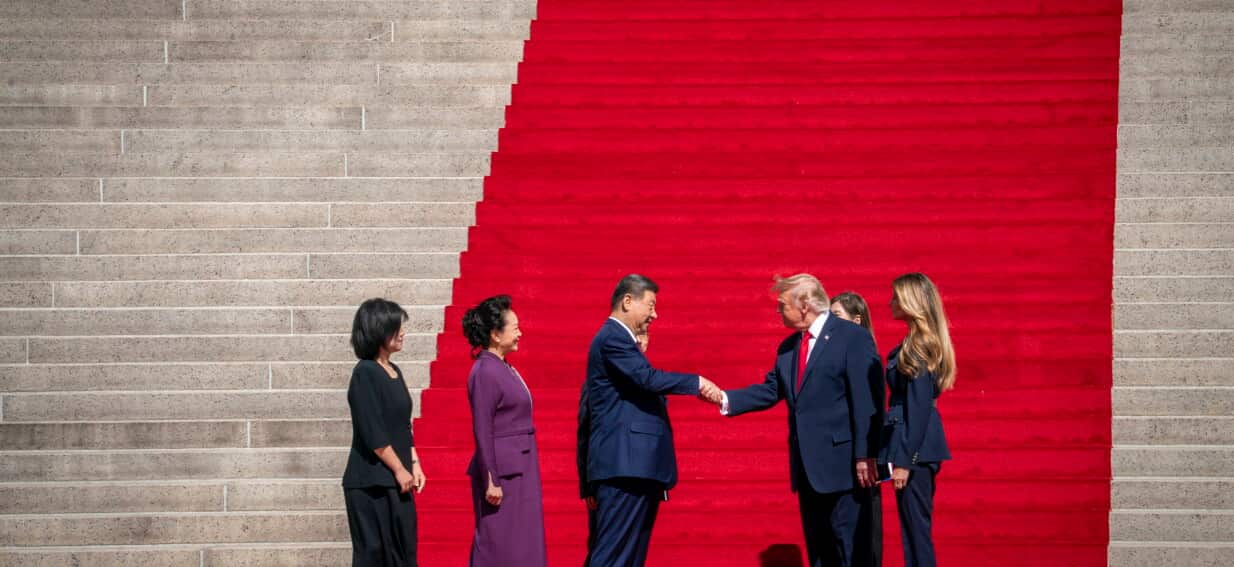
The three-day summit between Xi and US President Donald Trump, which ended on Friday, showcased personal diplomacy rather than big public breakthroughs. Xi has since landed in Beijing, Chinese state news agency Xinhua reported on Saturday.

The two sides also agreed to establish a trade council and to extend the outcomes of earlier talks in Kuala Lumpur, the Chinese foreign ministry said.

The agreement follows a move by the world's two largest economies to extend by two months a trade truce that had been due to expire on 10 November, allowing more time to work on ‌a potentially bigger trade deal, US treasury secretary Scott Bessent said on Wednesday.

"This historic visit enriched the constructive and stable China-US relationship, upheld the overall stability of bilateral ties, opened a new chapter in China-US relations, and will have a far-reaching impact on world peace and development," Chinese foreign minister Wang Yi said in a statement.

On artificial intelligence, the two sides agreed to hold a dialogue on the technology's risks and benefits, with the next round of discussions set for November, and to set up a communication channel for AI-related incidents, the Chinese Foreign Ministry and the White House said.

The White House said that the leaders had agreed to use the term "super intelligence" in place of "artificial intelligence".

In a separate statement, the Chinese ministry said it valued the US's use of the new term.

As AI technology continues to advance, the two sides should step up exchanges and work toward consensus in line with new developments, it said.

The two sides also agreed to support each other in hosting the Asia-Pacific Economic Cooperation leaders' meeting and the Group of 20 summit, with both leaders planning to attend the other's gathering.

On foreign policy, the leaders agreed that Iran should fulfil its commitment not to develop nuclear weapons, and that no country or entity should impose transit tolls on international waterways, both countries said.

You are reading our version, not theirs. This is SBS News's report with its verdicts and loaded words taken out. Plain description stays, and so do adjectives that carry a fact, such as "former" or "federal". The reporting, the facts and the quotations are theirs — quotations are never edited — and the indicators beside it measure this version. Hover or tap Adjectives to see every one left in the text.

How outlets headlined it

Each outlet's own headline. Struck through: the loaded words our version leaves out. Plainest first.

  • SBS News US and China agree on 'super intelligence' label for AI, cut tariffs by $42 billion plain
  • ABC News (Business) China, US agree to AI dialogue, $42b in tariff cuts during state visit plain
  • The West Australian China and US agree to AI dialogue, tariff cuts plain

How each outlet filed it

Also covered by The West Australian. We hold only their summary of it, not the report, so there is nothing of theirs to measure here.

Outlet Niral ScoreAdjectivesSourcingSentimentHappiness
SBS Newsas they published this story 5.4 7 88 0.1 56
ABC News (Business) 6.2 6 81 -0.1 55.4
Mundane Readneutralized from SBS News 5.4 7 88 0.1 56

Sign in to react.

Comments

Nothing here yet.

Sign in to comment.

Questions

Readers can ask a question about this story here. Questions and answers are for subscribers. Sign in to read them.

Comments are read before they appear where anything in them needs a person to look. Nothing posted here is ever deleted; a comment taken down keeps its text and the reason, so the decision can be looked at again. How this works

The same event elsewhere

2 other outlets filed this story. The scoreboard above is what they did differently.