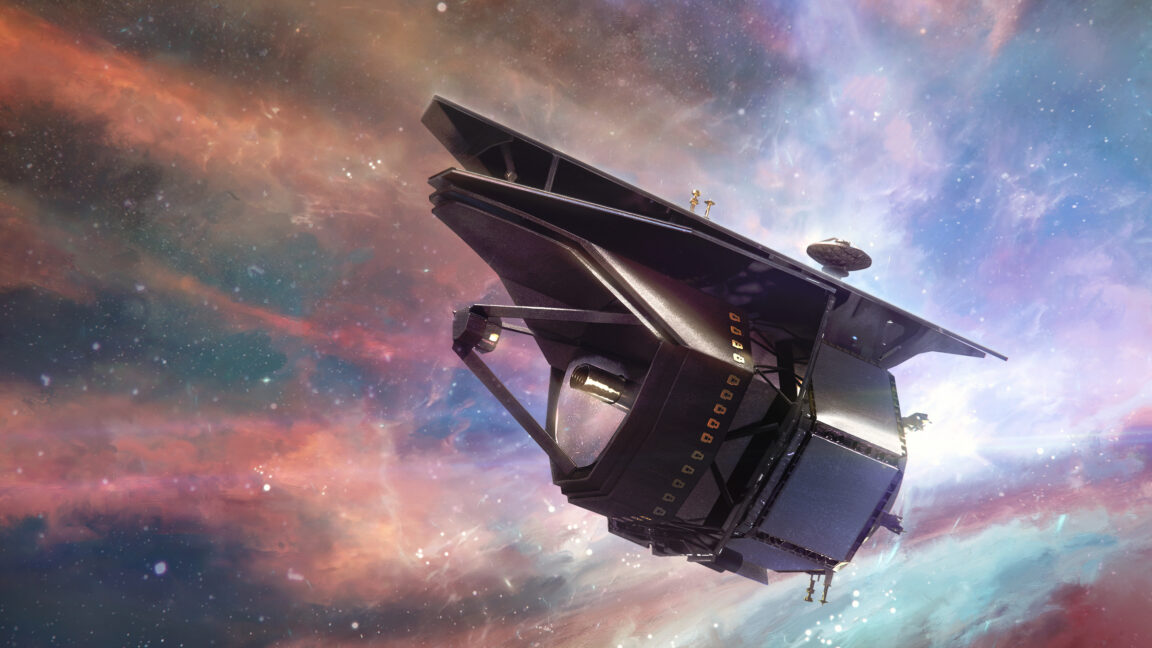
The first in a new class of space telescopes is on track to reach the launch pad in the early 2030s, NASA announced this week.
The PRIMA mission will be the first of NASA’s Probe Explorers, a new line of observatories intended to do more science for less money. The agency’s space telescopes typically fall into lower-cost “Explorer-class” missions, with cost caps in the range of a few hundred million dollars, or flagship observatories like the recently launched Nancy Grace Roman Space Telescope, which came with a price tag of some $4.3 billion.
With the Probe Explorers, NASA officials seek to find a better balance between the smaller Explorer missions and multibillion-dollar flagships.
NASA announced Wednesday it will move forward with PRIMA, short for the Probe far-Infrared Mission for Astrophysics.
The scientist leading the AXIS concept study blamed disruptions and mismanagement at NASA’s Goddard Space Flight Center in Greenbelt, Maryland, the NASA place charged with leading the AXIS mission if it moved forward into development. PRIMA will be led by NASA’s Jet Propulsion Laboratory in Pasadena, California with few missions in development and a series of layoffs.
The telescope will observe the Universe in faint, far-infrared light in a range of wavelengths between 24 and 235 micrometers, needing its primary optics to be cooled to 4.5 Kelvin, or minus 451° Fahrenheit.
PRIMA will instead use a spare leftover from the development of the James Webb Space Telescope, modified to use helium-3 instead of helium-4 as the cooling fluid.