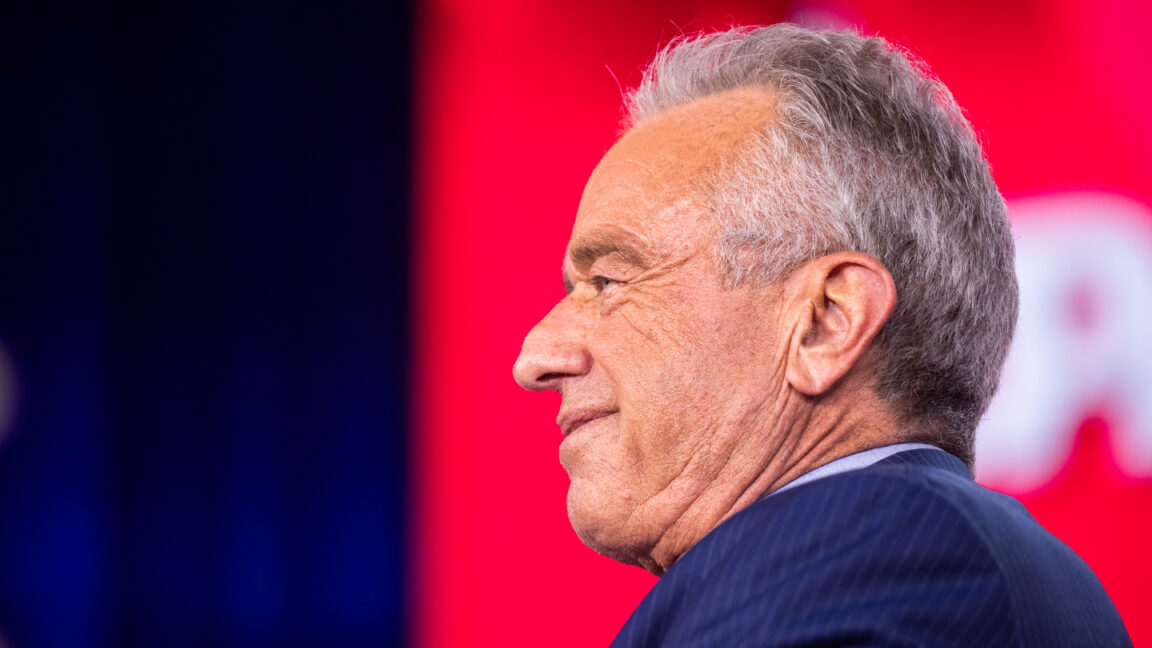
Anti-vaccine Health Secretary Robert F. Kennedy Jr. announced the names of eight new members of a 16-person federal task force intended to make scientifically independent, evidence-based recommendations on an array of preventive medicine services for Americans—from depression screening to statin use, colonoscopies, and mammograms.
Recommendations from the panel—the US Preventive Services Task Force (USPSTF)—don’t provide guidance for Americans; they also determine access. The USPSTF is supposed to use a rigorous, transparent framework for evaluating evidence and sets graded recommendations on an A to D scale. Health insurance providers are required to cover, at no cost, all preventive services that are given recommendations given an A or B grade.
Kennedy has sidelined the USPSTF for more than a year, canceling its meetings and refusing to appoint new members as terms expired and members left. In May, Kennedy also fired two leaders, sparking objections and exacerbating fears that he would the nonpartisan, independent panel by stacking it with unqualified, ideological-allies—which he did with an influence vaccine advisory committee at the Centers for Disease Control and Prevention.
Those fears seemed to be realized today with the announcement of members who are out of line with previous appointments. Many of the new members have expressed a shared ideology with Kennedy and the Trump administration. At least one voiced criticism of COVID-19 vaccines. At least two have attacked gender-affirming care. One is not even a doctor but a health economist who has worked with the Trump administration.
Five of the eight members are specialists, including cardiologists, a gastroenterologist, and a radiologist; the USPSTF has previously been made up of people who provide preventive care—generalist and primary care providers. This prevents specialists from swaying recommendations based on conflicts of interest. The USPSTF’s policy on conflict of interest disclosures has been removed, and the webpage that previously included it said the policy is now being updated.
In a statement Thursday, Willie Underwood, President of the American Medical Association, called Kennedy’s new slate of members “a significant departure from the Task Force’s traditional membership.”
USPSTF’s “credibility has been built on a membership grounded in prevention and primary care—the physicians who routinely deliver preventive services and understand how recommendations translate into clinical practice,” Underwood said. “We believe maintaining a strong primary care voice must remain central to its work.” He added that as this new panel gets to work, its recommendations must also “continue to be based on a transparent, rigorous, independent scientific process.”
That transparency is already in question. The New York Times noted that the nomination and selection process for new USPSTF members is supposed to be transparent and available to the public, but they have not been made available. Times reporters said they have repeatedly requested the materials on the nominees, including in an in-person request and through a Freedom of Information Act (FOIA) request. The Times filed a lawsuit for them in August. They still have not received the materials.
Seth Corey, a pediatric hematologist-oncologist at Cleveland Clinic, who donated to a Donald Trump super PAC, as reported by Stat News.
Patrick Hunter, a pediatrician at Pensacola Pediatrics in Florida, who has been critical of gender-affirming care for minors and said it leads to violence.
Ronald Karlsberg, a cardiologist and clinical professor of medicine at Cedars-Sinai Medical Center.
Venkatesh Murthy, a professor of preventive cardiology at the University of Michigan, who has been critical of COVID-19 vaccines.
Stephen Parente, a health economist and finance professor at the University of Minnesota’s School of Management. In Trump’s first term, Parente served as a senior economist on the White House Council of Economic Advisors. Trump nominated him to be the Assistant Secretary for Planning and Evaluation in the US health department, a role that requires Senate confirmation. His nomination was eventually withdrawn after concerns about financial conflicts.
Goldie Stands-Over-Bull, a family medicine physician at Texas Native Health.
Louis Wilson, a gastroenterologist at Wichita Falls Gastroenterology Associates in Texas.
Dennis Wulfeck, a radiologist at RadPartners MBB Radiology in Florida.